

10 Reasons Foodie Travelers Should Visit South Korea
South Korea, Asia / August 5, 2026 / Be the first to comment
South Korea is one of the most exciting food destinations in Asia, especially for travelers who plan their itineraries around what to eat next. As a picky eater/ foodie traveler, I was nervous and excited for my taste buds to experience Korean food. From sizzling Korean BBQ and colorful street food to traditional market dishes and trend-setting cafés, the country offers an incredible range of flavors and experiences. Whether the trip starts in Seoul, heads south to Busan, or includes smaller cities known for local specialties, food quickly becomes one of the highlights of traveling in South Korea. Foodie travelers should visit Korea for the wealth of diversity in every dish.
For anyone building a South Korea food itinerary, these are some of the biggest reasons the country deserves a top spot on the list.
This post contains affiliate links. This means if you purchase something from a link, I may make a small commission, at no cost to you. This helps me keep the site running and free.
If you like this post, be sure to sign up for my e-mail list for travel inspiration & tips, or connect with me on Facebook, Instagram, Twitter, BlueSky, Threads, or Pinterest. I also have a Facebook group where you can ask me anything travel related – and I share travel deals!
1. South Korea Has One of the Best Street Food Scenes in Asia
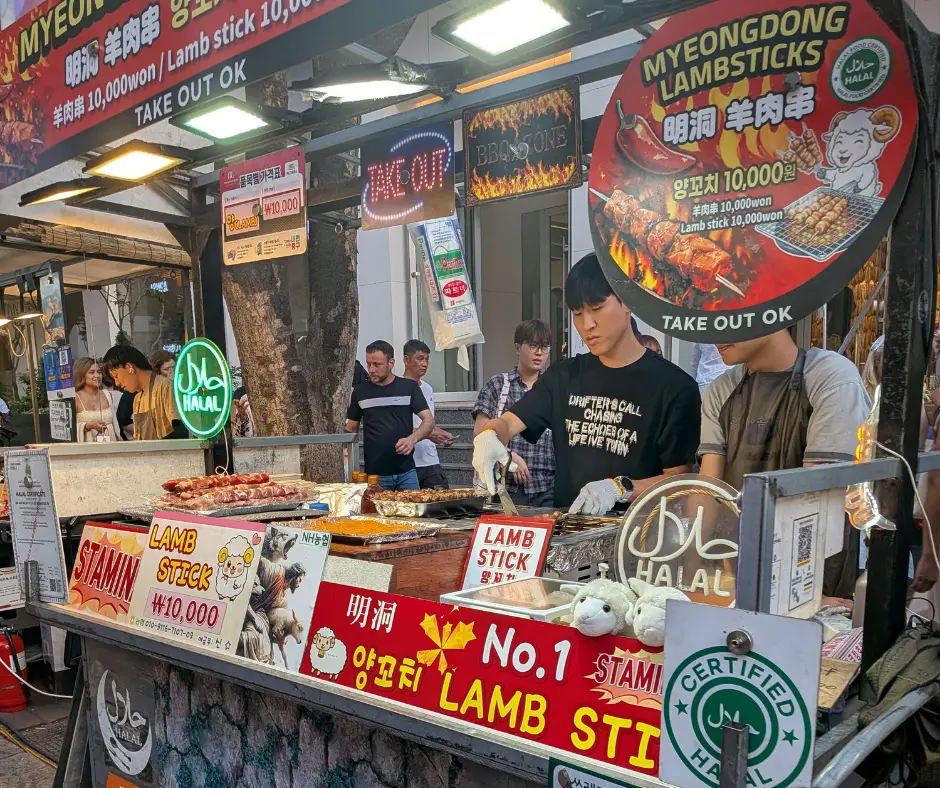
One of the top reasons foodie travelers visit South Korea is the street food. In cities like Seoul, Busan, and Daegu, night markets and food stalls serve a huge variety of affordable, flavorful dishes. Favorites like tteokbokki (chewy rice cakes simmer in a spicy-sweet red chili sauce), hotteok (pan-fried pancakes filled with brown sugar, cinnamon, and chopped nuts), twigim (fried snacks – can be squid, sweet potato, dumplings, or veggies), mandu (Korean dumplings), and fish cakes are easy to find and perfect for sampling throughout the day.
Seoul is one of the best places to dive into Korean street food, with several neighborhoods and markets known for easy, delicious snacking. Myeongdong is one of the most famous spots for visitors, especially in the evening, when stalls line the streets with everything from tteokbokki and grilled lobster to skewers, egg bread, and hotteok. Gwangjang and Namdaemun Markets are a must-visit for food lovers.
In Busan, the street food scene has a strong seafood influence and a more coastal feel. BIFF Square is one of the city’s best-known food areas, with stalls selling ssiat hotteok, a Busan specialty filled with seeds, sugar, and nuts. Gukje Market is another great stop for sampling a range of local snacks, while the streets around Jagalchi Market are ideal for seafood-focused bites and casual market eating.
Daegu is also worth mentioning for its excellent market culture. Seomun Market is one of the city’s best-known food destinations and a great place to try traditional Korean snacks in a lively local setting. It is especially popular for evening eating, with plenty of quick bites and comforting dishes that reflect the city’s strong food culture.
2. Regional Food Specialties Make Every Destination Feel Different
Food in South Korea varies by region, which makes traveling across the country even more rewarding. Rather than offering the same dishes everywhere, different cities and provinces are known for specialties shaped by local agriculture, geography, climate, and history. Jeonju, for example, is famous for bibimbap, and it is often considered the best place in the country to try it. This is partly because Jeonju has long been known for its rich culinary traditions and high-quality ingredients, including fresh vegetables, rice, beef, and jang-based seasonings. The city’s reputation for refined cooking is tied to its history as a center of royal and aristocratic food culture, which helps explain why a seemingly simple rice bowl feels especially polished and balanced here.
Busan offers a completely different flavor profile thanks to its coastal location and strong seafood culture. As South Korea’s largest port city, Busan is known for dishes like milmyeon, a cold wheat noodle dish that became popular through northern influences after the Korean War, and dwaeji gukbap, a comforting pork soup with rice that has become one of the city’s signature meals. Fresh seafood is another major reason Busan stands out, especially in and around Jagalchi Market, where travelers can try everything from raw fish to grilled shellfish. Andong, located inland, is best known for Andong jjimdak, a braised chicken dish cooked with soy sauce, vegetables, and glass noodles. Its popularity is tied to the region’s long agricultural history and its use of practical, hearty ingredients, creating a dish that feels both deeply local and widely beloved.
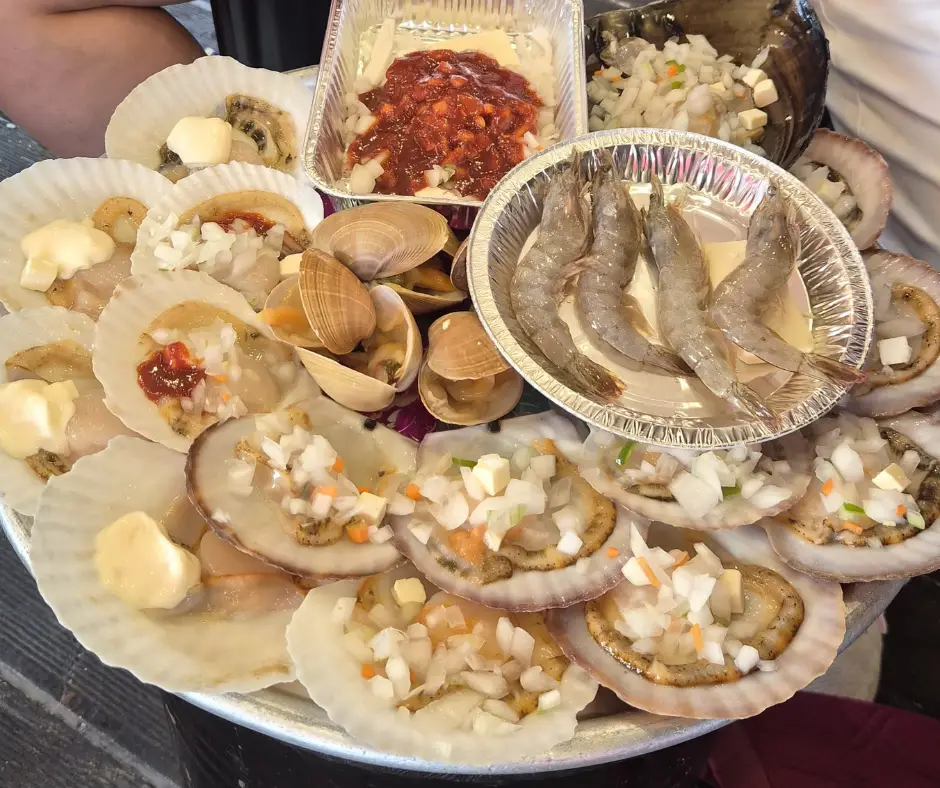
I visited a restaurant created by woman divers who hunt for seafood. This profession was made famous by the book Sea Women about the female divers of Jeju Island. Some of these women made it to other places around South Korea, including Busan. I had the honor of sitting with one and asking her about it. The seafood was incredible, so I highly recommend trying it when in Busan!
Speaking of Jeju Island (unfortunately I didn’t have time to visit here during this trip) – the island has its own climate, volcanic landscape, and relative geographic isolation. The means the cuisine feels noticeably distinct from that of the mainland. Jeju black pork is one of the island’s most famous specialties, valued for its rich flavor and texture, while dishes featuring abalone, hairtail fish, and fresh seafood reflect Jeju’s strong connection to the sea. The island is also known for hallabong citrus, which appears in desserts, juices, and sauces thanks to Jeju’s mild growing conditions.
Instead of finding the same meals everywhere, tyou would get a chance to experience the unique identity of each destination through local cuisine. Eating across the country is a way to understand the identity, landscape, and traditions of each place.
3. Korean BBQ Is a Must-Have Culinary Experience
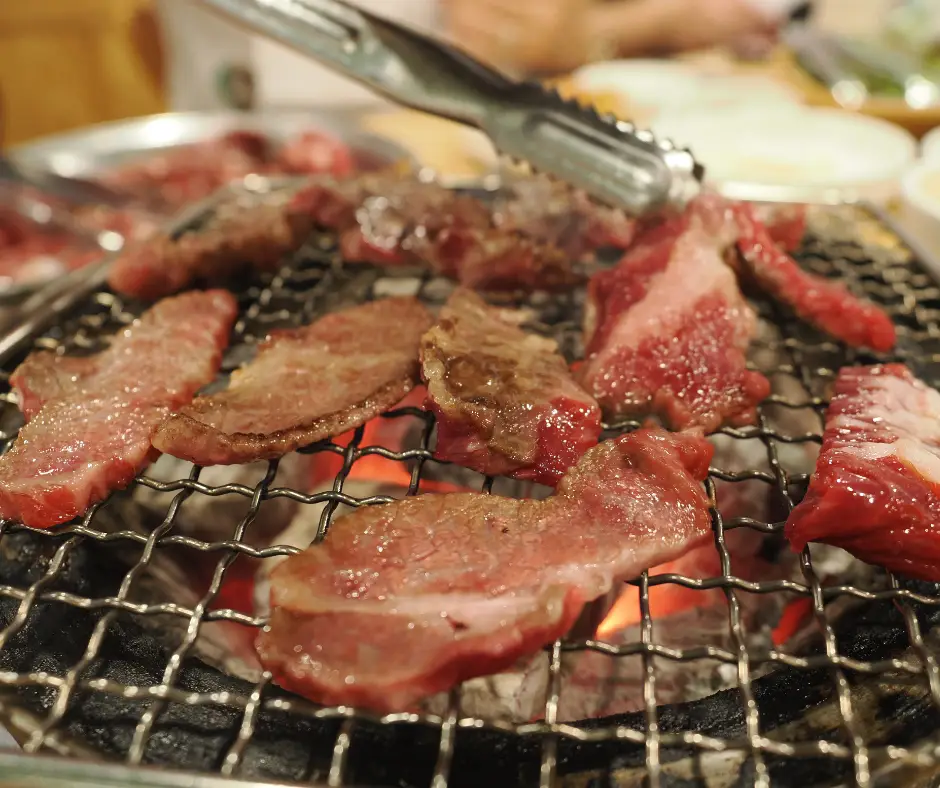
No South Korea food trip feels complete without Korean barbecue. It is more than just a meal—it is an interactive dining experience built around grilling meat at the table, pairing it with sauces, and wrapping it in lettuce with garlic, kimchi, and other toppings. Meat is grilled right at the table, turning the meal into an interactive experience that feels social, lively, and distinctly Korean. Depending on the restaurant, diners can choose from a range of meats including samgyeopsal, the famously thick slices of pork belly; galbi, marinated beef short ribs; bulgogi, thinly sliced marinated beef; mok, pork neck; and sometimes chicken, duck, or premium cuts of Hanwoo beef. I honestly thought I would get tired of Korean BBQ, but it was impossible. The variety of meats, marinades, and sauces made each one unique. Not to mention the banchan (variety of sides that are served with BBQ)! More on that below!
4. Banchan Adds Variety to Every Meal
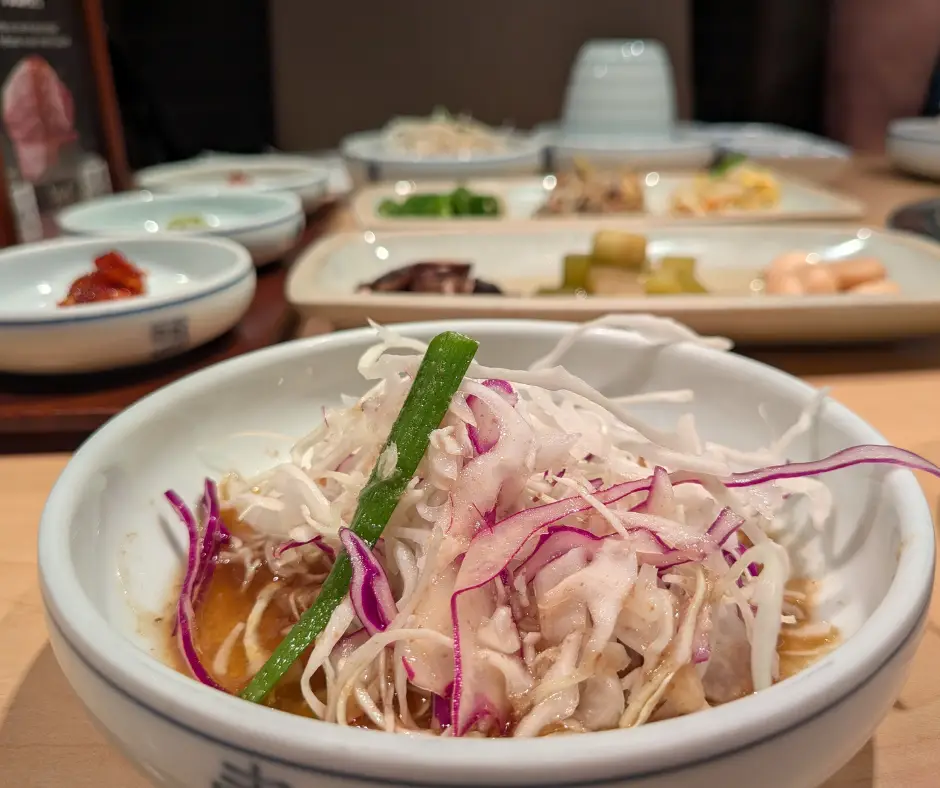
Another reason South Korea stands out as a foodie destination is the abundance of banchan, the small side dishes served with many meals. These are not just decorative extras but an essential part of the dining experience, adding variety, balance, and texture to the table. A typical spread might include kimchi, pickled radish, seasoned spinach, marinated bean sprouts, stir-fried fish cake, tofu, potato salad, or small servings of seaweed. Even before the main dish arrives, the meal already feels abundant and thoughtfully prepared.
What makes banchan especially appealing for foodie travelers is how each dish adds something different to the overall flavor experience. Some sides are spicy, some tangy, some savory, and others cool and refreshing, helping balance richer dishes like barbecue, stews, or grilled fish. Banchan also reflects the Korean approach to communal dining, where a meal is meant to feel shared and complete rather than centered on one plate alone. For me, this constant variety was one of the most enjoyable and distinctive parts of eating in South Korea.
If you have food allergies or are sensitive to spice, please be sure to get someone to tell you what each dish is. Our Intrepid guide always told us what each side dish was and whether it was spicy or not
5. Korean Cuisine Is Full of Bold Fermented Flavors
South Korea is a fantastic destination for travelers who appreciate deep, complex flavors. Fermented ingredients like kimchi, doenjang, gochujang, and ganjang are central to Korean cooking and create the rich, layered taste the cuisine is known for. Kimchi is the most internationally recognized example, but it is only one part of a much broader culinary tradition. Staples like doenjang, a fermented soybean paste, gochujang, a fermented red chili paste, and ganjang, Korean soy sauce, form the backbone of countless soups, marinades, dipping sauces, and braised dishes. These ingredients add complexity and depth that go far beyond simple heat or saltiness.
For foodie travelers, these fermented flavors make Korean cuisine feel especially distinctive and rewarding. A stew made with doenjang has an earthy richness, while a dish seasoned with gochujang brings heat, sweetness, and umami all at once. Fermentation is also closely tied to Korean food history, preservation methods, and seasonal eating, so tasting these flavors offers a better understanding of the culture itself. It is one of the reasons meals in South Korea often feel so memorable: the flavors are bold, balanced, and rooted in generations of culinary tradition.
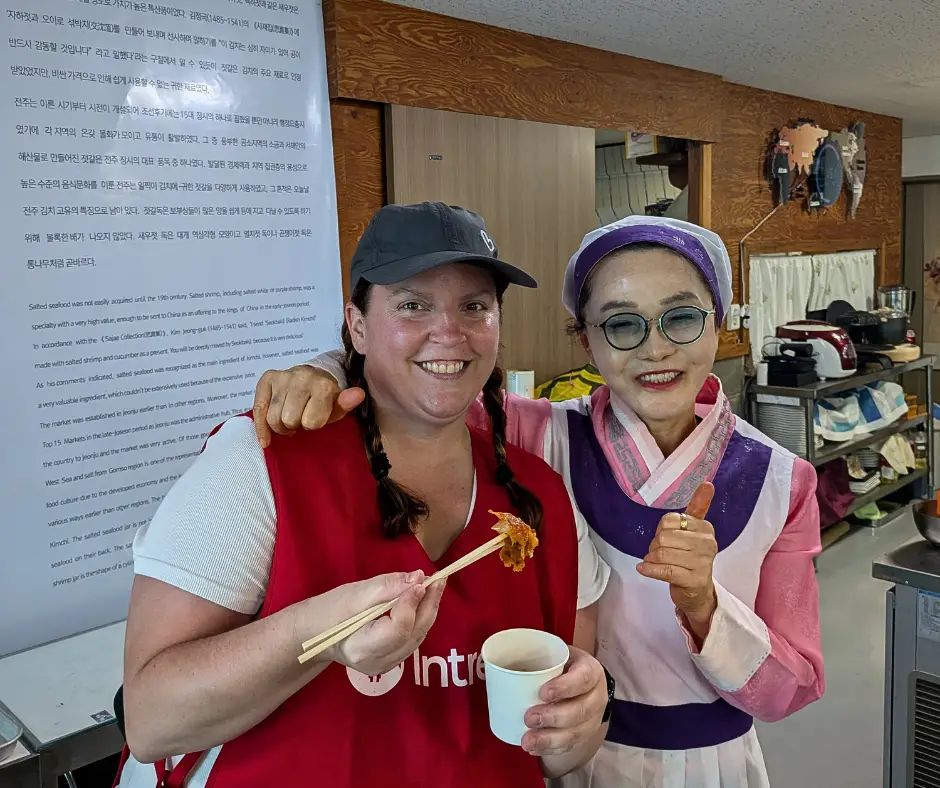
If you have the chance to do a kimchi-making class, I highly recommend it. It was my first official time trying kimchi, and what better place to try it than from an expert?
6. Traditional Markets Are a Dream for Food Lovers
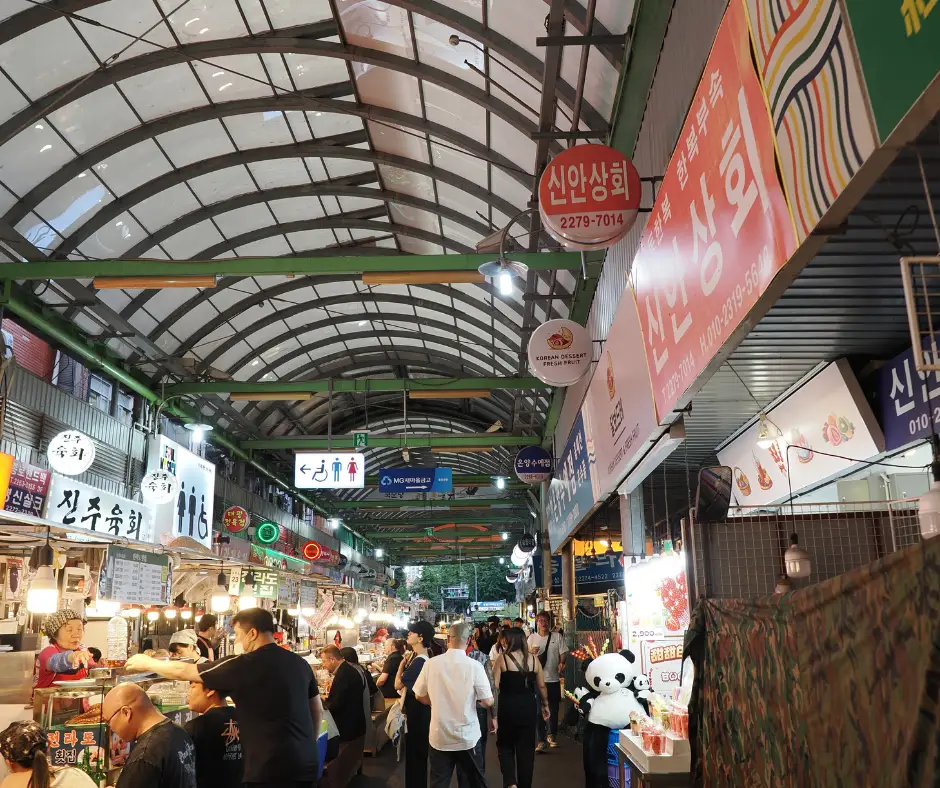
Exploring traditional markets is one of the best things to do in South Korea for foodies. Markets like Gwangjang Market in Seoul or Jagalchi Market in Busan are packed with local specialties, ready-to-eat snacks, and long-standing food stalls.
What makes these markets so special is that they offer more than just good food. They also provide a closer look at daily life, local ingredients, and long-standing culinary traditions. Many stalls have been operating for years, sometimes across generations, and the dishes they serve often reflect regional specialties or recipes with deep roots. For travelers who want an experience that feels both authentic and approachable, traditional markets are one of the most rewarding places to eat in South Korea.
Travel tip: If you get food at a stall, you have to carry your trash. If you eat it in front of the stall, the vendor will take the trash. There are not trash bins around like other cities. Other food vendors may take it for you if they see you carrying it around. Whatever you do, don’t litter.
7. Seafood Lovers Have Endless Options
Thanks to its long coastline and strong fishing culture, South Korea is an excellent destination for seafood. Coastal cities and fish markets offer an impressive range of dishes, from grilled shellfish and spicy seafood stews to raw fish, marinated crab, and abalone porridge. In Busan especially, seafood is part of the city’s identity, and places like Jagalchi Market allow travelers to see just how fresh and varied the offerings can be. The seafood culture varies by region and season.
Part of what makes seafood in South Korea so exciting is the variety in preparation and presentation. Some dishes are simple and highlight freshness, while others are bold, spicy, and deeply savory. You can try hoe, Korean-style raw fish, bubbling seafood hot pots, grilled eel, soy-marinated crab, or shellfish cooked right at the table. This range means seafood experiences can feel completely different from one meal to the next. For anyone who loves coastal cuisine, South Korea offers plenty of opportunities to explore beyond the usual restaurant staples.
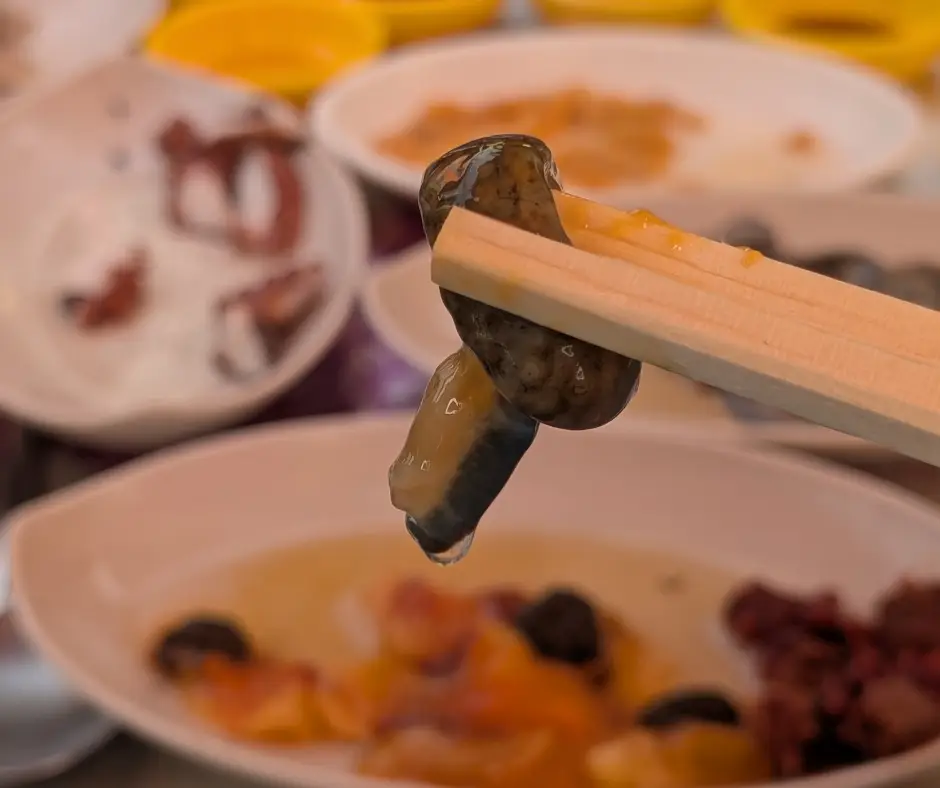
For me, trying raw octopus (that was still squirming), sea squirt, and sea cucumber were quite the experiences. The only one I’d have again was the octopus – and I typically don’t like octopus. Don’t be afraid to try something again!
8. South Korea Is Perfect for Late-Night Eating
One of the best things about eating in South Korea is that the food day often stretches well into the night. In many cities, restaurants, bars, food stalls, and casual eateries stay open late, making it easy to find something delicious after an evening out or a long day of sightseeing. Late-night food culture is especially strong in neighborhoods known for nightlife, where you can move from grilled meat to fried chicken, soups, skewers, or street snacks without much planning. If you have a late night sweet tooth like me, you can find some sweet bread or even some marshmallow-fried ice cream! This makes South Korea an especially fun destination for travelers who like spontaneous food experiences.
Late-night meals also reveal another side of Korean dining culture: comfort food plays a big role. Warm bowls of gukbap, spicy ramen, tteokbokki, Korean fried chicken, and sizzling grilled dishes are all popular choices after dark. The atmosphere can be just as memorable as the food, with bustling streets, neon-lit storefronts, and busy tables creating a lively energy that feels uniquely urban and social. For foodie travelers, those late-night meals often become some of the most memorable moments of the trip.
9. The Café Culture Is Stylish, Creative, and Destination-Worthy
I honestly had no idea that coffee was such a big deal in South Korea. Not just for waking up either, iced coffee was a necessity throughout the day. South Korea’s café culture has become a major attraction in its own right. From minimalist coffee shops to dessert cafés with artistic interiors, the country is full of beautiful spaces that combine design, presentation, and quality.
In cities like Seoul, cafés are often beautifully designed spaces with distinct concepts, polished interiors, and carefully crafted menus. Some focus on specialty coffee, while others are known for artistic desserts, seasonal drinks, or unique themes. Neighborhoods such as Seongsu, Yeonnam, Hongdae, and Garosu-gil are especially popular for café hopping, with new spots constantly opening alongside long-loved favorites.
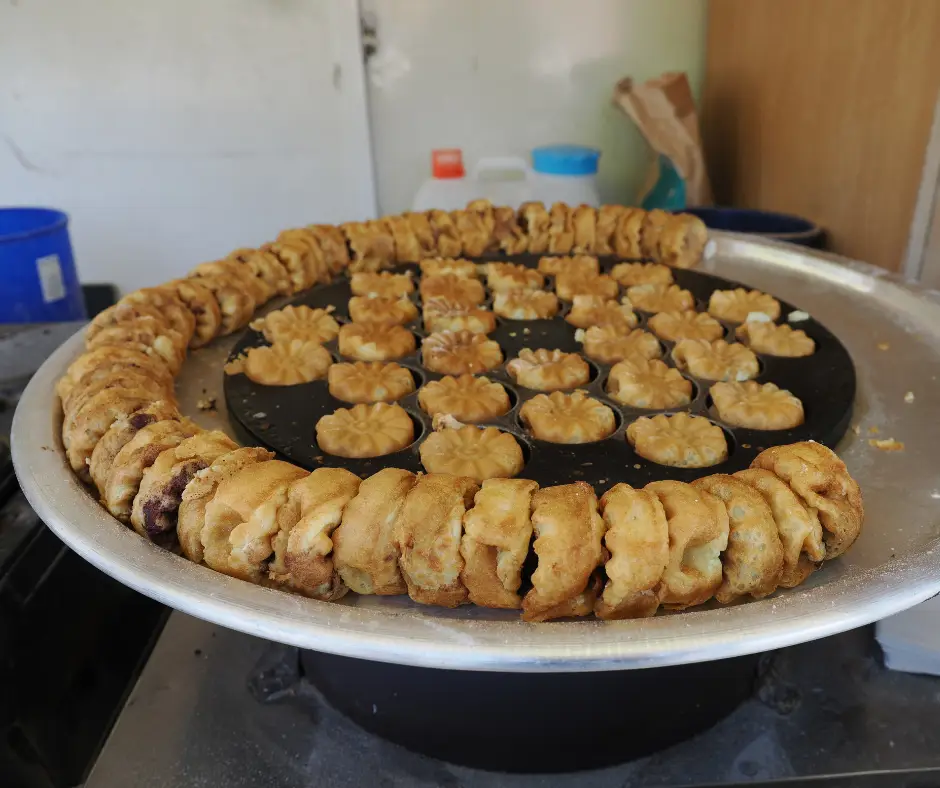
It was nice to have a break from the savory food to enjoy chrysanthemum bread or cinnamon bread with sweet red bean.
10. Food Is One of the Best Ways to Connect With Korean Culture
One of the strongest reasons to visit South Korea for food is that meals offer such a clear window into the country’s culture. Sharing dishes, grilling together, exploring seasonal ingredients, and visiting family-run eateries all help travelers experience Korea beyond the typical sightseeing checklist.
The way food is shared, prepared, and served reflects values like community, balance, tradition, and hospitality. Whether it is gathering around a grill for Korean BBQ, sharing banchan at the table, or enjoying a seasonal dish tied to a particular holiday or time of year, food often reveals how closely dining is connected to everyday life in Korea. Even simple meals can carry a strong sense of place and cultural identity.
For me, it made eating feel more than just checking dishes off a list. By the end of the trip, I just let the food call to me rather than figure out what I wanted to eat. Being part of a group allowed me to try new foods that others shared and share food that I wasn’t a huge fan of with others.
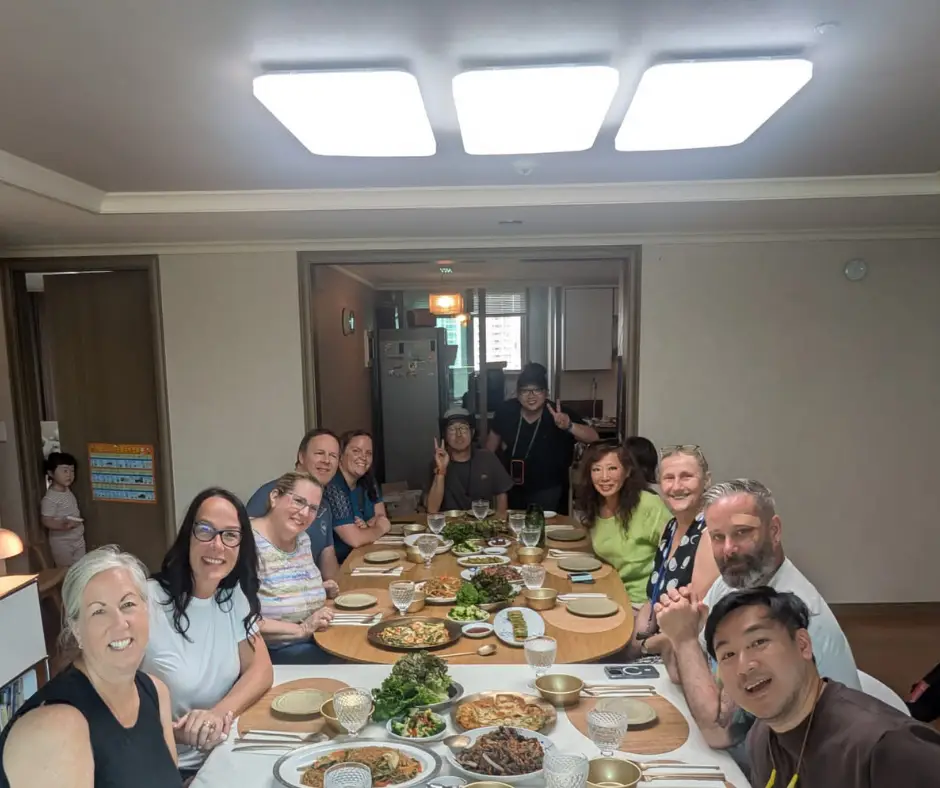
One of the most special experiences I had in South Korea, was sharing a meal with a family. As part of the trip, we got to experience apartment life in South Korea. A gated community with a playground, childcare, barbershop, grocery store, and more was incredible. We met Daniel, his wife, and children. We learned about how to make traditional Korean dishes. The meal in his home felt like a holiday get together with family and friends than tourists visiting a different country. I will forever be grateful for that experience.
Final Thoughts
As a picky eater who is sensitive to spice, I was intimidated by the cuisine of South Korea. But as a foodie traveler, I couldn’t wait to bite my teeth into it. I flew into the country as a blank slate, with minimal expectations, and left with a whole new appreciation of the food and culture. If you consider yourself a foodie traveler, or just want to expand your palette, then South Korea should be on your bucket list.
Save “Foodie Travelers Should Visit South Korea” for Later

About the Author

Read More About South Korea


Have You Seen These Yet?


Hey there! I’m Pamela. Just a woman who has fallen in love with getting lost around the world. I’ve traveled to 42 countries across 7 continents.
My mission? To inspire you to ‘let the bucket list flow’ and see what the world has to offer.
My promise: All of my photos are not edited. What you see is what you get.
Join a small-group safari to Kenya & Uganda!
- Go trekking and get close to gorillas and chimpanzees
- See the big 5 Safari Animals
- See The Great Migration
- Sunrise hot air balloon ride and champagne breakfast included
- Maximum of 12 guests
Capital Cities book

- Discover the world through this 258 page book covering 118 cities
- 3 photos by me!
- Perfect as a gift or for your coffee table
Travel Shop
- Accommodation Comparison Excel
- Printable Bucket Lists
- Travel Planning Resources
- & More!
Leave a Reply