

The Ultimate Guide to Murchison Falls National Park, Uganda
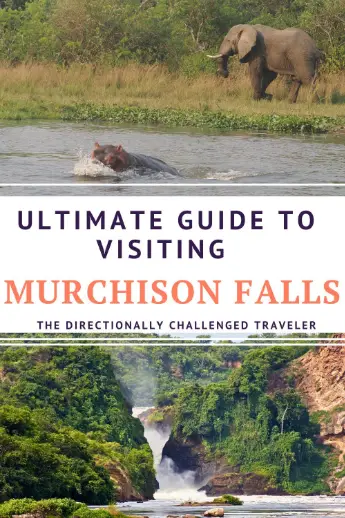
Imagine the ground beneath your boots vibrating with the force of the world’s longest river being squeezed through a gap no wider than a suburban driveway. It’s the most powerful waterfall in the world, and many people don’t even know it exists (including me until I visited Uganda myself). As the mist from the Victoria Nile hits your face, you realize you aren’t just looking at a waterfall; you’re witnessing the raw power of Murchison Falls.
Murchison Falls National Park is Uganda’s oldest and largest conservation area, and let me tell you—it’s a place that stays with you long after the dust has settled on your safari gear. From the “Big Five” to the prehistoric shoebill stork, I’m taking you through everything you need to know to plan your own adventure here.
This post contains affiliate links. This means if you purchase something from a link, I may make a small commission, at no cost to you. This helps me keep the site running and free.
Impact-Site-Verification: 6611f922-916d-4433-8326-1bd69d4f6cbf
If you like this post, be sure to sign up for my e-mail list for travel inspiration & tips, or connect with me on Facebook, Instagram, Twitter, BlueSky, Threads, or Pinterest. I also have a Facebook group where you can ask me anything travel related – and I share travel deals!
When should you visit Murchison Falls National Park?
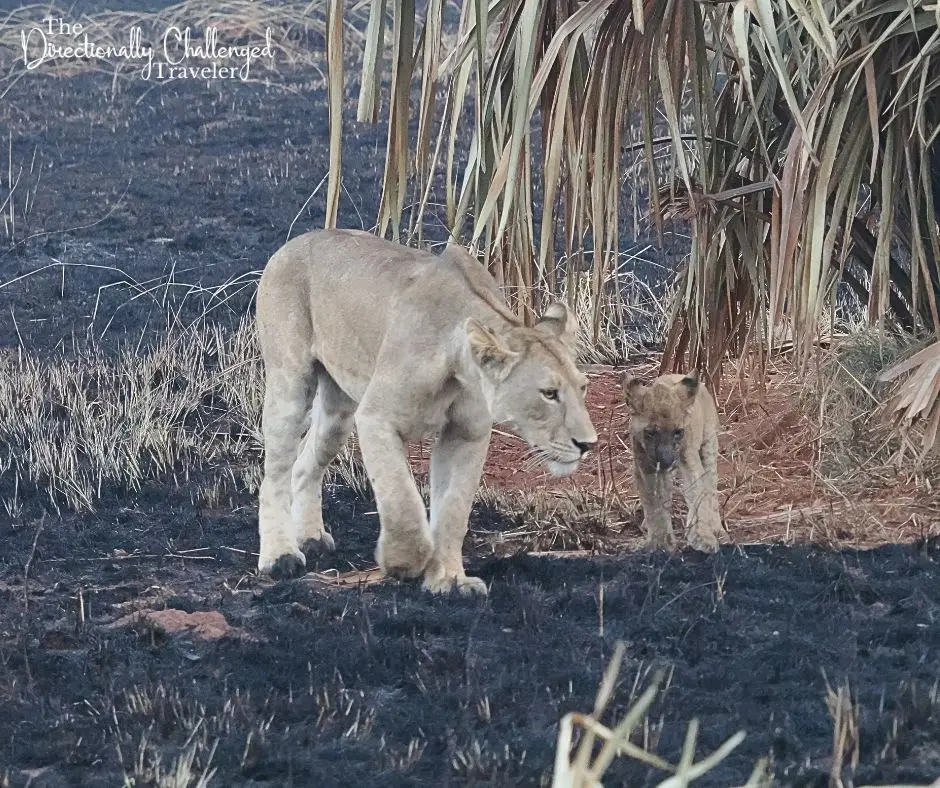
Murchison Falls National Park is a year-round destination, but your experience will shift depending on the season. During my visit in January, I found the conditions ideal for wildlife viewing. Because January falls within the primary dry season (the other dry season runs from June to September), the savannah grass had thinned out and turned a beautiful golden hue, making it much easier to spot lions and leopards that would otherwise be hidden in the brush. The heat can be quite intense during this time, often reaching between 25 and 32 degrees Celsius, but the payoff is that animals congregate in massive numbers along the banks of the Victoria Nile to drink, giving you a front-row seat to the action during boat safaris.
If you prefer a more lush, emerald landscape, you might consider the wet seasons from March to May or October to November. While the rains can make the park tracks a bit slippery and challenging to navigate, the scenery is breathtakingly green, and the waterfall itself is at its most powerful. This is also prime birdwatching time, as migratory species are present and the park’s 450+ bird species are highly active. However, having experienced the park in the dry heat of January, I highly recommend that window if your primary goal is to see as many mammals as possible in the shortest time. You’ll also find (hopefully) plenty of babies to observe!
How much does it cost to visit Murchison Falls National Park?
- Foreign Non-Residents (FNR): $40 USD
- Foreign Residents (with permits): $30 USD
- East African Community (EAC): 25,000 UGX (Ugandan Schillings)
- Foreign Registered Safari Vehicle: $30 USD
- Ugandan Registered Safari Vehicle: 30,000 UGX
- Domestic Flight (One way to Pakuba): $150-250 USD
A few activities are available at the park for an additional fee.
- Boat safari to the base of the Falls: $30 USD per person
- Hike to the Top of the Falls: $15 USD per person
- Daytime Guided Game Drive with UWA ranger: $20 USD per vehicle (foreigners), 30,000 UGX (EAC)
- Night Guided Game Drive with UWA ranger: $40 USD per vehicle (foreigners), 40,000 UGX (EAC)
- Bird Watching Tour: $30 USD per person
Note on Dollars: Ensure your US Dollar bills are crisp, clean, and printed after 2013, as many places in Uganda will not accept older notes.
Also, don’t forget to tip your ranger and your driver!
Getting There and Getting Ready
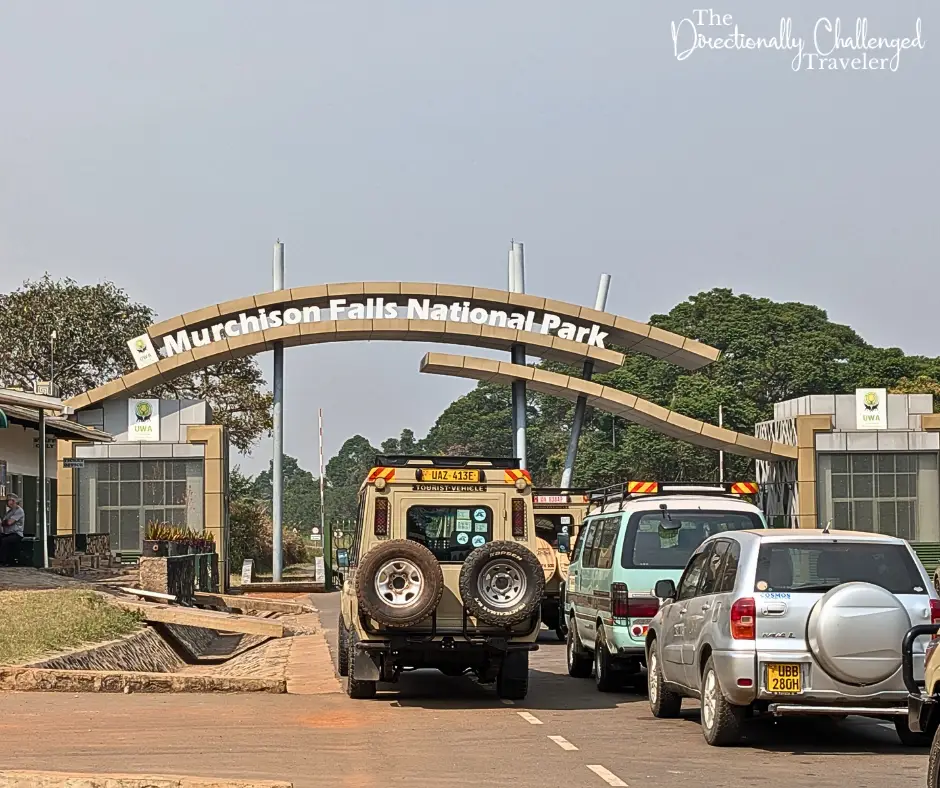
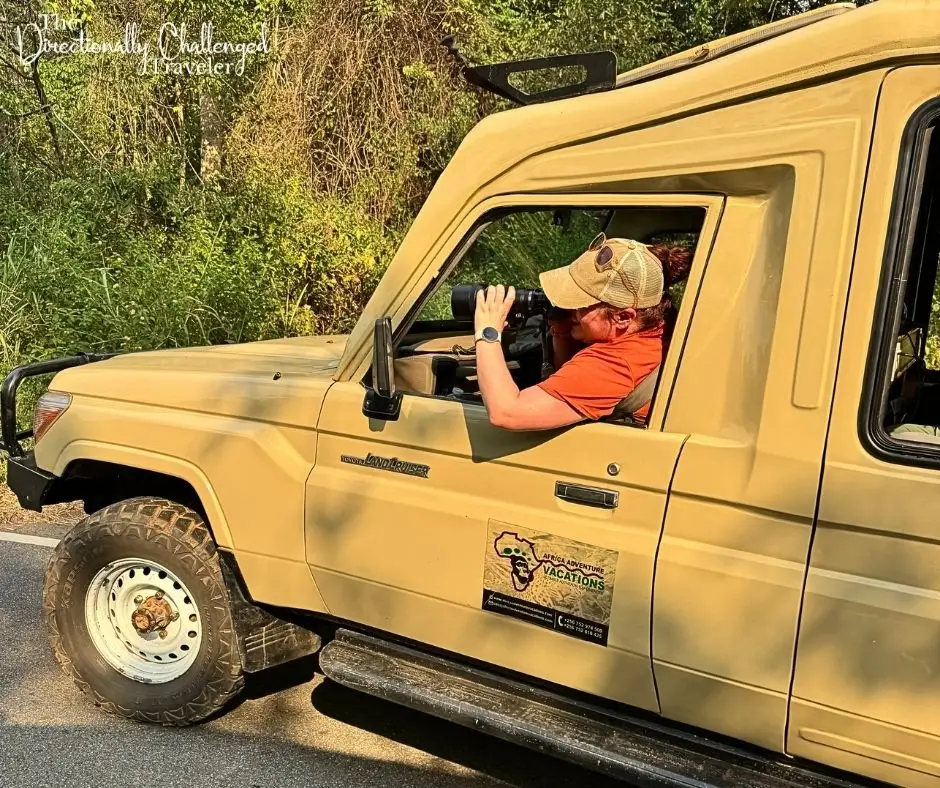
The journey from Entebbe or Kampala takes about five to six hours, respectively. I recommend hiring a 4×4, as the roads inside the park can be adventurous, especially after rain. We made a stop at Ziwa Rhino Sanctuary to break up the long drive. Many guided safaris to Murchison Falls do include Ziwa – so if you can stop there, I highly recommend it! If you’re prone to motion sickness, take your medication at breakfast. Driving on the roads is affectionately nicknamed “an African massage.”
If you’re short on time, you can hop on a domestic flight to the Pakuba airstrip, but there’s something special about watching the Ugandan landscape transition from bustling towns to lush green wilderness.
Pro Tip: Aim for the dry seasons (December–February or June–September). The animals congregate around the water holes, making your job as a wildlife spotter much easier!
The Spectacle: Seeing the Falls
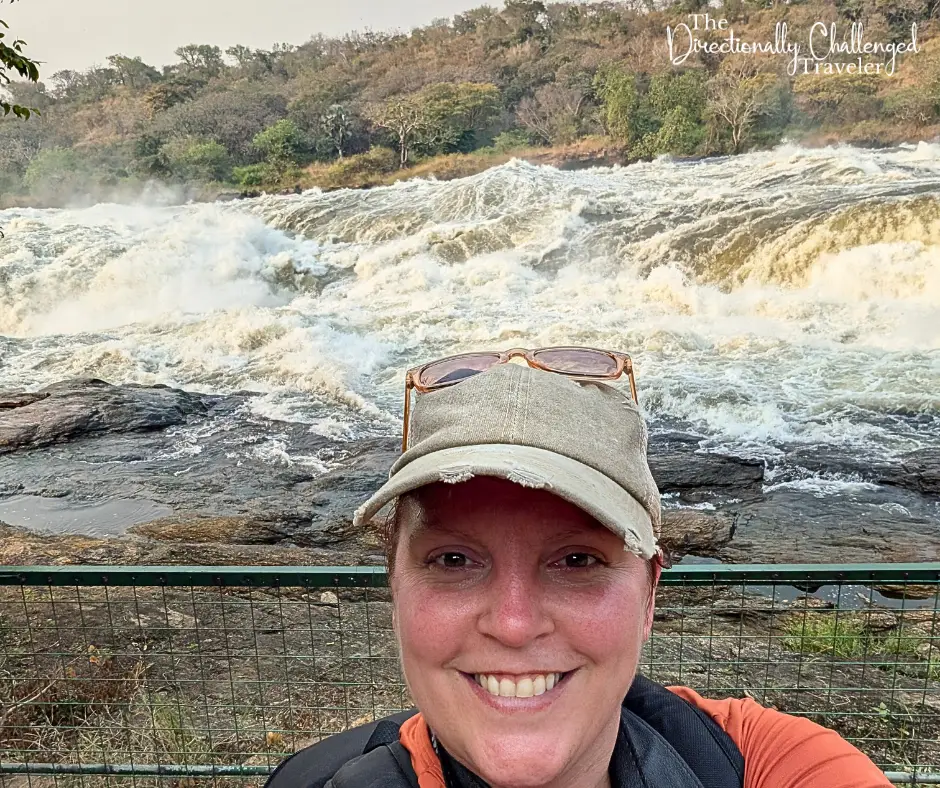
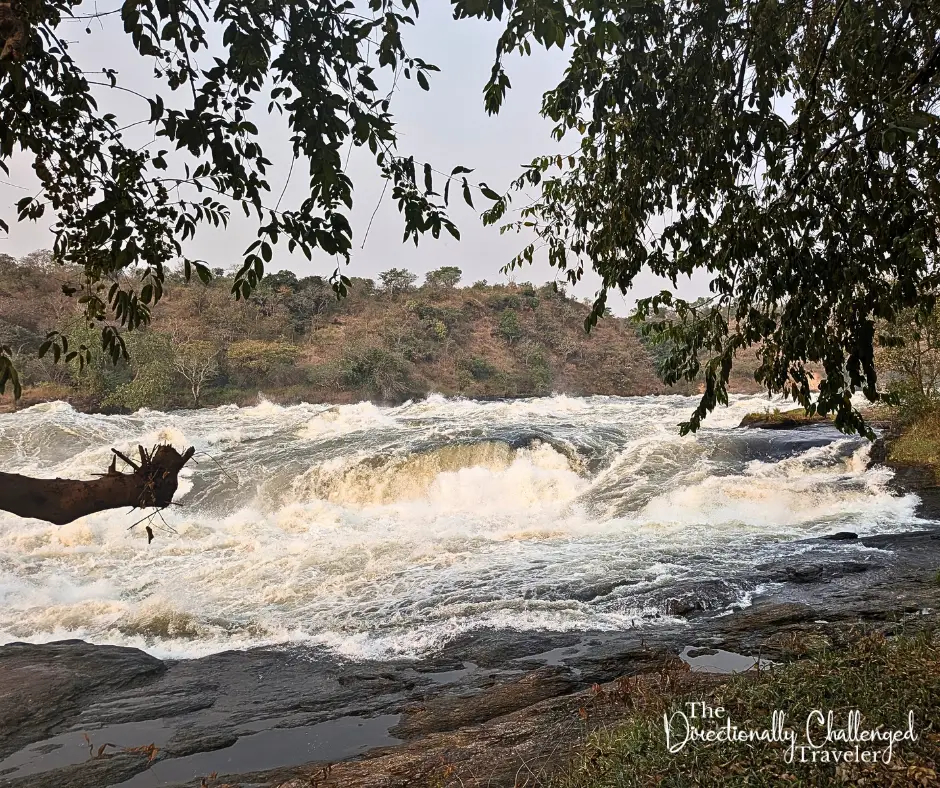
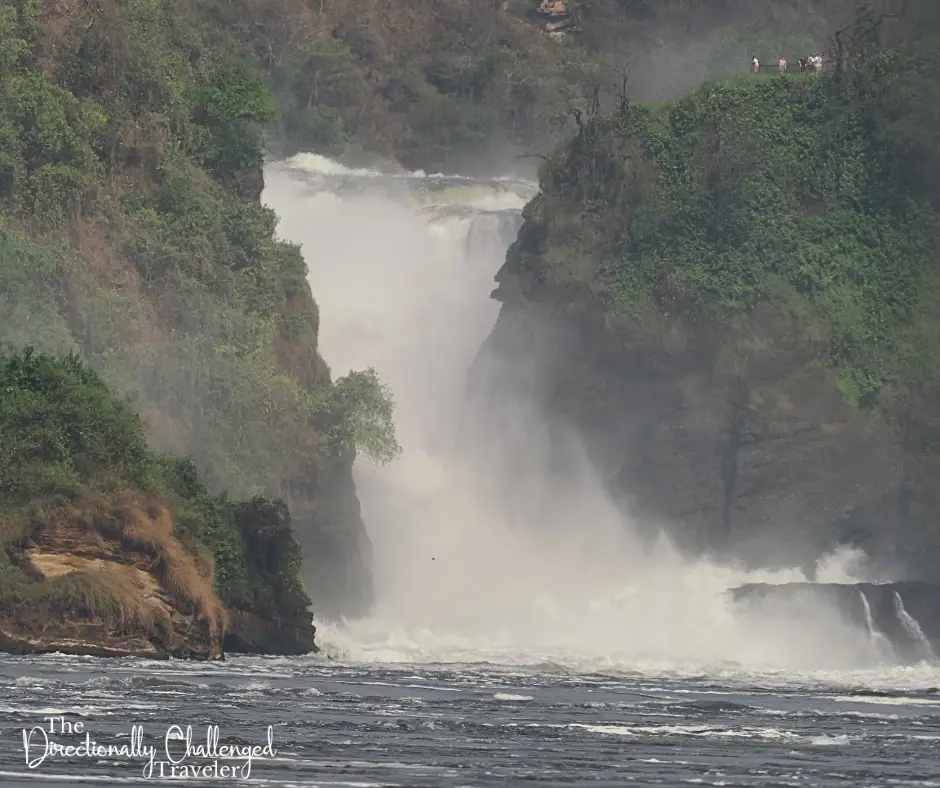
You haven’t seen Murchison until you’ve stood at the “Top of the Falls.” Watching the entire Nile surge through a seven-meter canyon into the “Devil’s Cauldron” is humbling.
Murchison Falls is the most powerful waterfall in the world – yes, even more powerful than Niagara Falls, Victoria Falls, and Iguaçu Falls. Yet many people have never heard of it. You can walk to the top and see the power up close! Be prepared to get wet. If you’re standing near the most powerful waterfall, it’s bound to splash you!
Be sure to check out my packing list for Uganda!
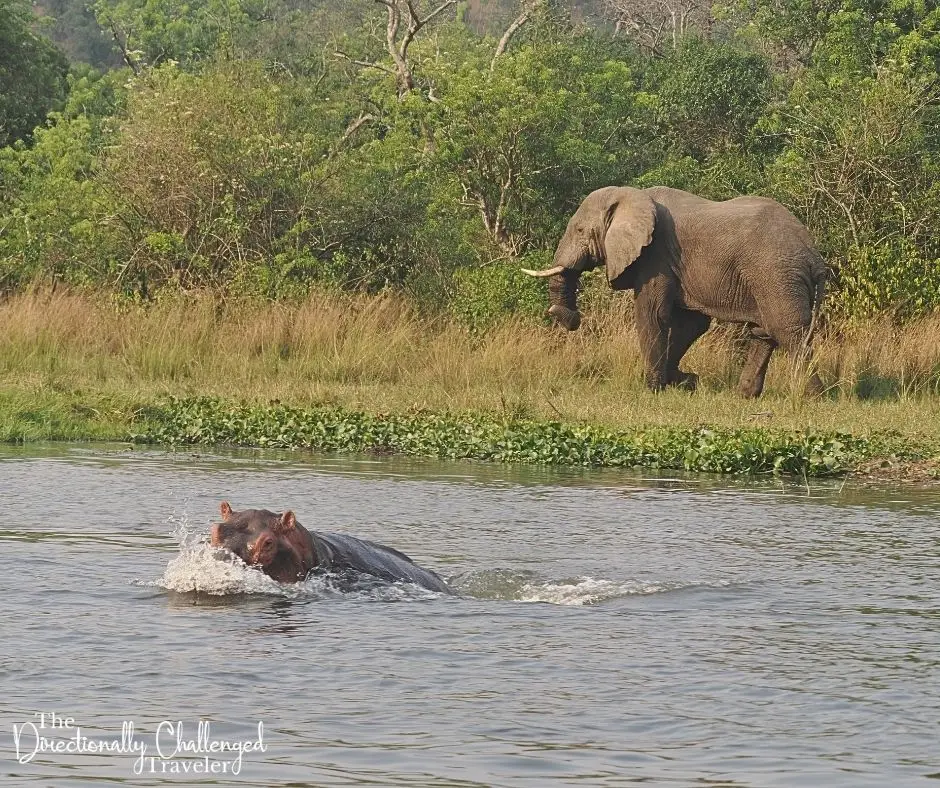
The other way to see the falls is by boat. Not only is it a different perspective of the falls, but you’ll also see marine animals. As I cruised upriver, I lost count of the hippos and massive Nile crocodiles sunning themselves on the banks.
Daytime on the Buligi Tracks
When you head out for your morning game drive (usually in the early hours since that is when animals are most active), keep your eyes peeled for the Buligi tracks. This is where I saw the famous Rothschild giraffes towering over the acacia trees. You’ll also see massive herds of elephants and Cape buffalo.
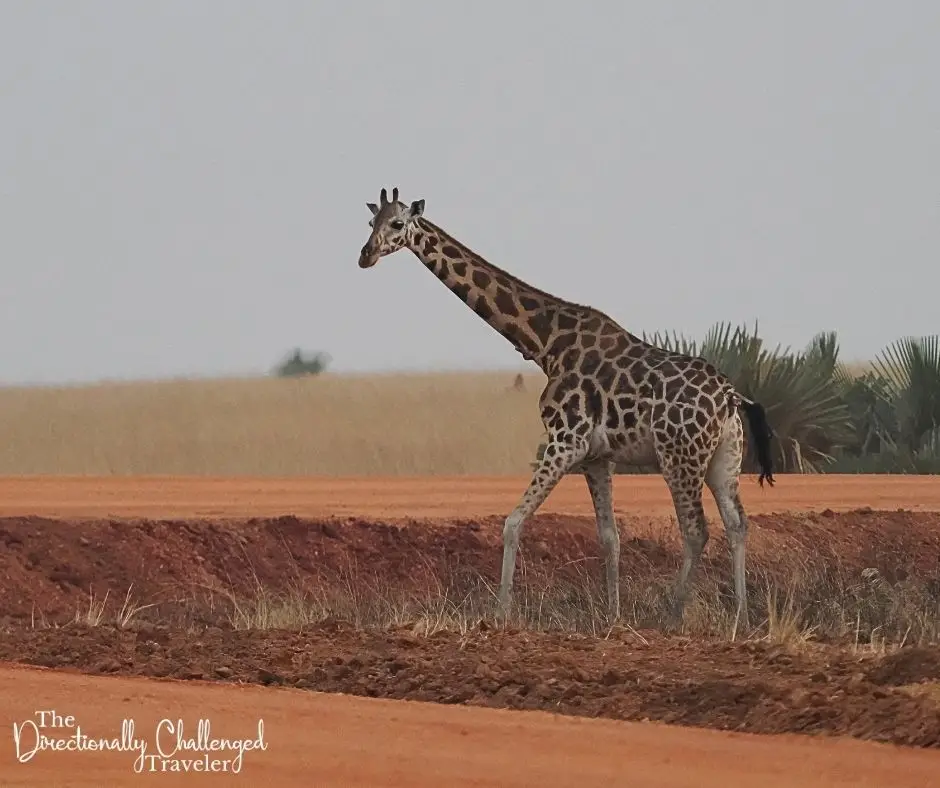
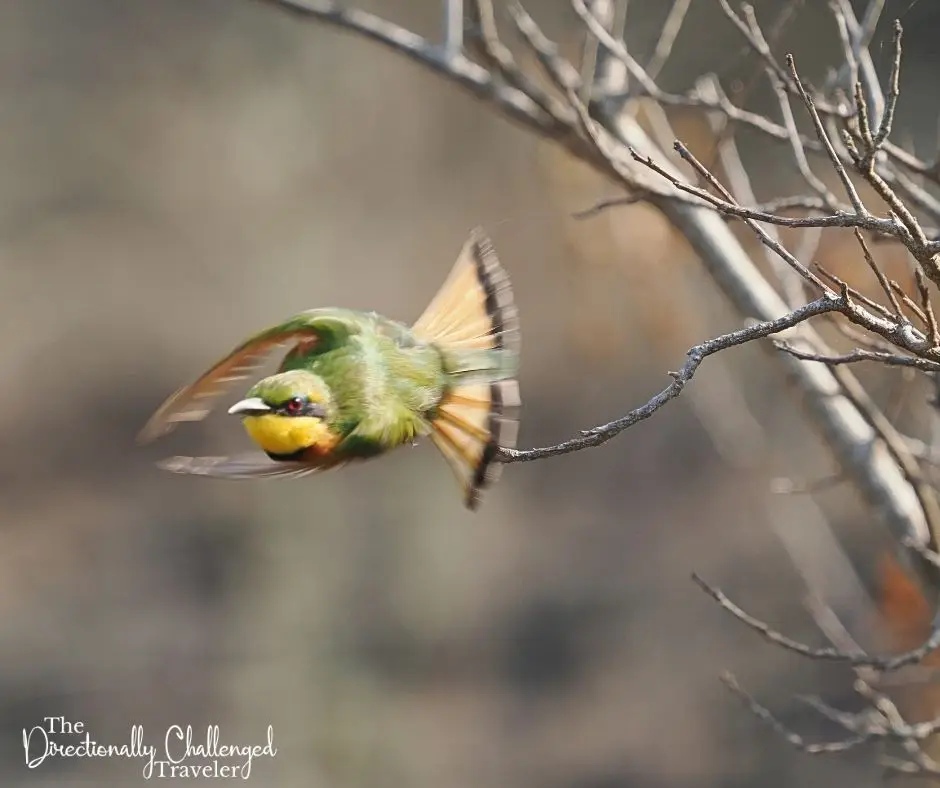
If you’re lucky, you might spot a lion pride lounging in the golden grass. Remember, these animals are masters of camouflage, so take your time and bring a good pair of binoculars! Don’t forget there is magic in the smaller animals. Birdwatching is popular throughout the park.
After Dark: The Magic of the Night Drive
While the daytime is spectacular, I think the real magic happens after the sun dips below the horizon. Most people return to their lodges for dinner, but I suggest you have an early dinner and then head out for a night game drive.
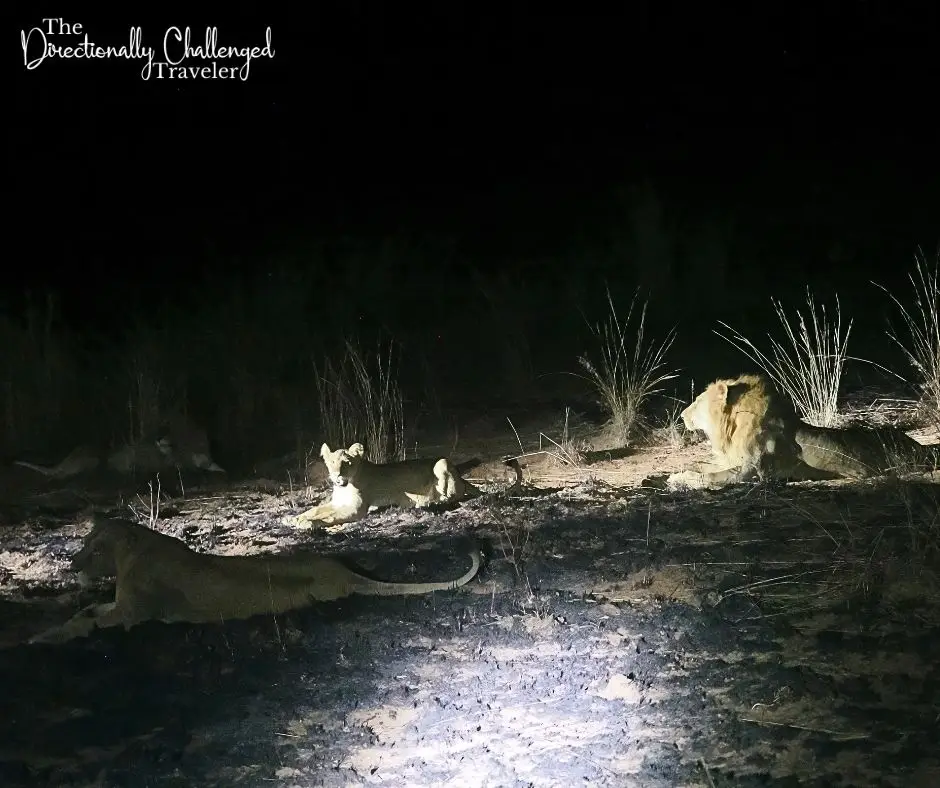
Venturing out with a UWA (Uganda Wildlife Authority) ranger and a high-powered spotlight is a completely different experience. The savannah transforms. In the beam of the light, we saw the glowing eyes of a leopard prowling through the thicket—something you almost never see during the day.
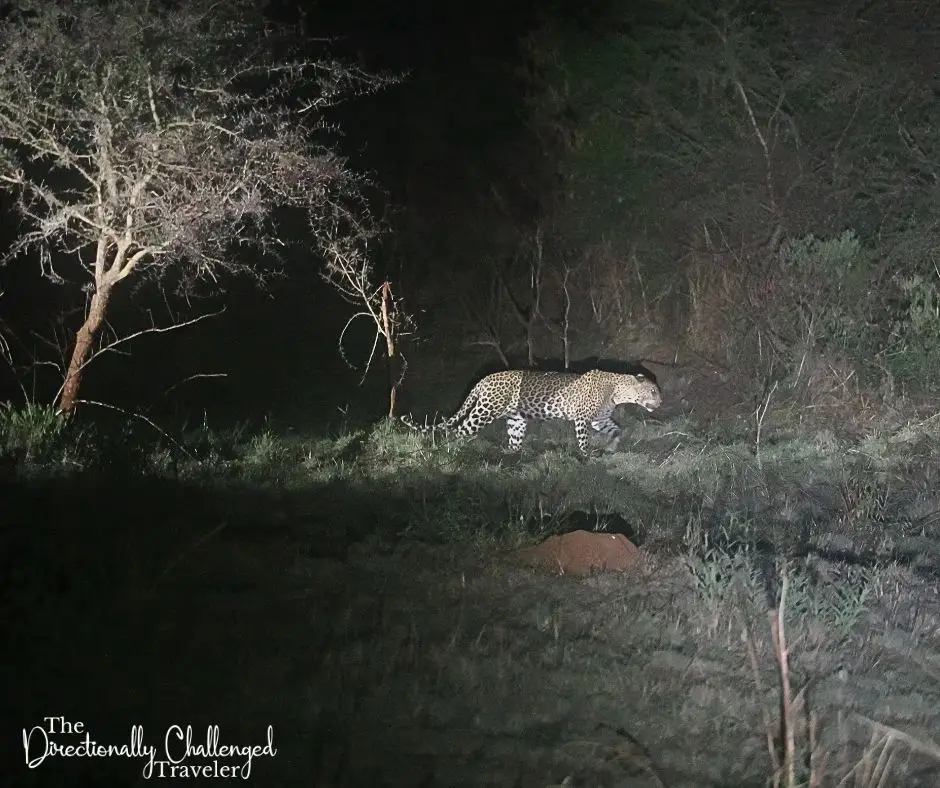
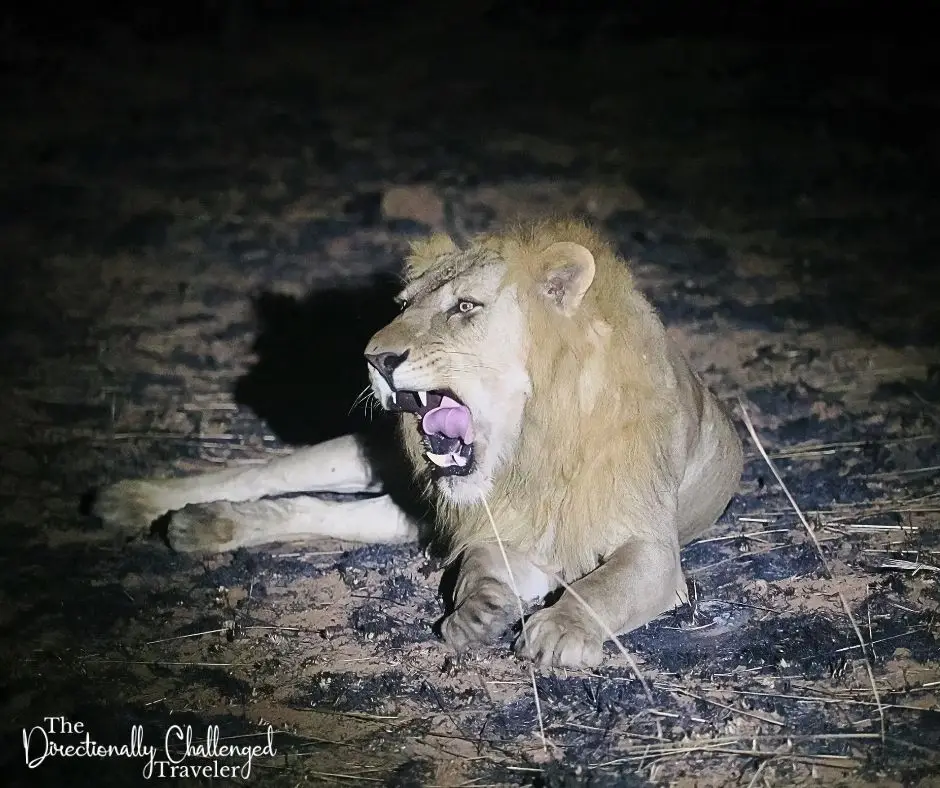
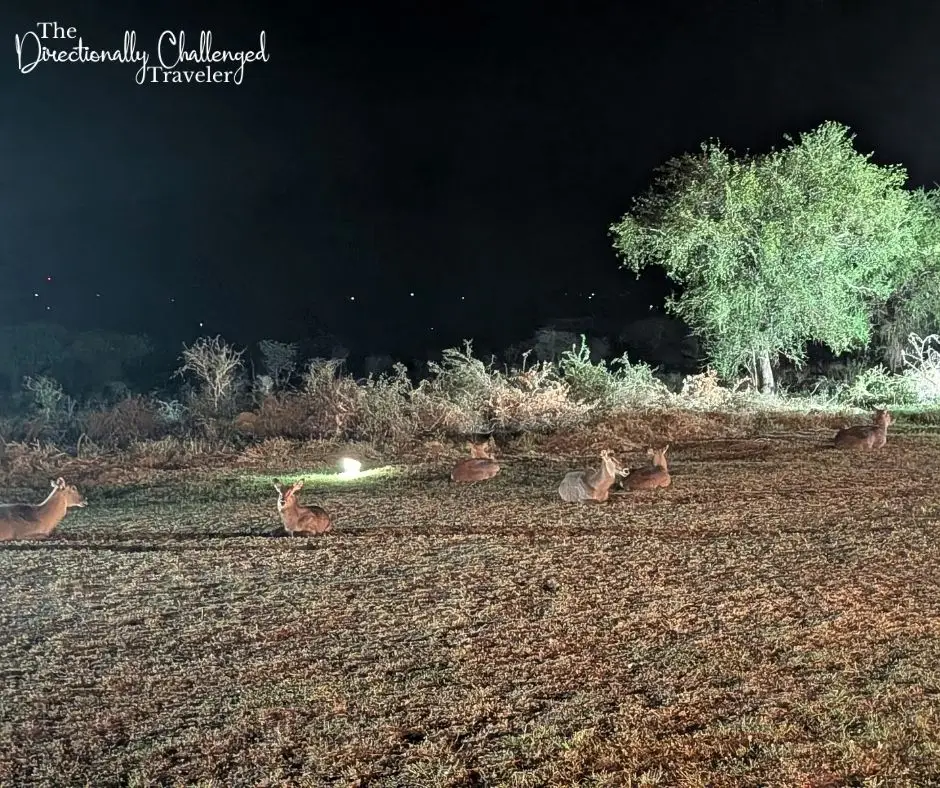
We also spotted hyenas, a pride of lions, and TWO leopards. The sounds are different, too; the daytime bird calls are replaced by the eerie “whoop” of a hyena and the chirping of birds. You’ll also have incredible views of the stars.
It is, hands down, the most thrilling thing you can do in the park.
Where to Stay near Murchison Falls
We stayed at Pakuba Safari Lodge, located right near the park. In fact, we had waterbucks hanging by our restaurant in the evening and morning. The morning we left, there were elephants nearby as well. Does it get any better than that?
Packing Essentials
Neutral clothing: Don’t wear bright colors (especially blue, which attract Tsetse flies!)
Insect Repellent: A must-have for the river areas. I also always pack these mosquito repellent bracelets.
Low-light Camera Gear: Essential if you want to capture the leopard on your night drive.
Be sure to check out my essential items for a visit to Uganda for more packing necessities!
Conclusion
Murchison Falls is the crown jewel of Uganda for a reason. It’s a place where the power of nature and the beauty of wildlife collide. Whether you’re standing at the edge of the crashing falls or scanning the dark savannah for a predator’s eyes, you’ll leave feeling a little bit more connected to the wild.
Save “Visiting Murchison Falls National Park, Uganda” for Later
About the Author
Read More About Uganda



One response to “The Ultimate Guide to Murchison Falls National Park, Uganda”

What an amazing destination! Murchison Falls looks absolutely breathtaking.
Have You Seen These Yet?

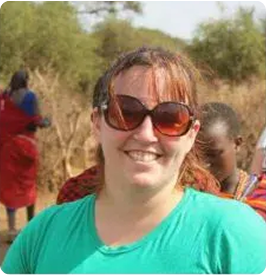
Hey there! I’m Pamela. Just a woman who has fallen in love with getting lost around the world. I’ve traveled to 42 countries across 7 continents.
My mission? To inspire you to ‘let the bucket list flow’ and see what the world has to offer.
My promise: All of my photos are not edited. What you see is what you get.
Join a small-group safari to Kenya & Uganda!
- Go trekking and get close to gorillas and chimpanzees
- See the big 5 Safari Animals
- See The Great Migration
- Sunrise hot air balloon ride and champagne breakfast included
- Maximum of 12 guests
Capital Cities book

- Discover the world through this 258 page book covering 118 cities
- 3 photos by me!
- Perfect as a gift or for your coffee table
Travel Shop
- Accommodation Comparison Excel
- Printable Bucket Lists
- Travel Planning Resources
- & More!
Leave a Reply