

20+ Best Things to Do in Busan, South Korea
Asia, South Korea / October 28, 2026 / Be the first to comment
If someone told me a few years ago that a city in South Korea would become one of my all-time favorite destinations, I might have assumed they meant Seoul. And while Seoul is undeniably incredible, Busan completely stole my heart — and honestly? It deserves its very own trip. I wish I could’ve spent the rest of my trip peeling back the layers of this city.
It’s rawer and more relaxed than Seoul, with mountains tumbling straight into the sea, a coastline dotted with beaches and dramatic cliffs, temples perched on rocky headlands, and a food culture so good I was already planning a return trip. It’s a city where you can hike a mountain in the morning, slurp noodles in a market at noon, surf in the afternoon, and watch fireworks explode over a glittering bridge at night.
Whether you’re planning a dedicated trip or adding Busan to a South Korea itinerary, this guide covers everything you need — the best beaches, temples, neighborhoods, festivals, viewpoints, and more.
This post contains affiliate links. This means if you purchase something from a link, I may make a small commission, at no cost to you. This helps me keep the site running and free.
If you like this post, be sure to sign up for my e-mail list for travel inspiration & tips, or connect with me on Facebook, Instagram, Twitter, BlueSky, Threads, or Pinterest. I also have a Facebook group where you can ask me anything travel related – and I share travel deals!
When to Visit Busan
Busan is a year-round destination, but the season you choose will shape your experience significantly.
Spring (March–May) is one of the most beautiful times to visit. Cherry blossoms bloom in late March and early April, temperatures are mild and comfortable, and crowds are manageable. The city feels alive with color, and it’s the perfect time to hike Geumjeongsan or stroll through Yongdusan Park.
Summer (June–August) is peak beach season. If you want to swim at Haeundae, catch a beach festival, or try your hand at surfing, this is your window. That said, Busan’s monsoon season hits in late June through mid-July, and typhoons are always a possibility in August. Expect heat, humidity, and large crowds — but also a truly electric atmosphere along the waterfront. I was not expecting the humid heat when I was there in early June, so be prepared.
Autumn (September–November) is my personal pick for the best time to visit (and when I want to re-visit this city). The heat breaks, the skies turn crisp and blue, and Busan hosts some of its biggest events back-to-back — the Busan International Film Festival in early October and the Busan Fireworks Festival on the last Saturday of October. Fall foliage on the mountains adds another layer of beauty.
Winter (December–February) is Busan’s secret season. As South Korea’s warmest major city in winter, it’s far more pleasant than Seoul. The hot spring jjimjilbang culture comes into its own, the beaches are hauntingly beautiful and crowd-free, and prices drop considerably. If you’re visiting Korea in winter and haven’t considered Busan, you’re missing out.
A Brief History of Busan
Long before it became South Korea’s second-largest city and one of the world’s busiest ports, Busan had already been shaped by thousands of years of history (so this is a super-brief history by a non-history buff).
The area’s earliest known settlers date back to the Gaya confederacy, a collection of Iron Age city-states that thrived along the southeastern coast of the Korean peninsula from around the 1st to 6th centuries CE. Its position at the peninsula’s southeastern tip made it a natural gateway—to Japan, to trade routes, and eventually to the rest of the world.
During the Joseon Dynasty (1392–1897), Busan served as the primary Korean trading hub with Japan. A formal Japanese settlement called waeigwan was established here in the early 1400s, making Busan one of the few places in Korea where Japanese merchants could live and operate. This relationship — complex, commercial, and often fraught — would define much of Busan’s character for centuries.
The Japanese colonial period (1910–1945) brought rapid, if oppressive, modernization. The port was expanded, railways were built, and Busan’s population swelled. Many of the city’s early 20th-century urban bones date to this era, including the foundations of Jagalchi Market and the central Nampo-dong district.
The most defining event in modern Busan’s history, however, was the Korean War (1950–1953, technically still an active war in Korea, but there is an agreement). When North Korean forces swept south in June 1950 and pushed the Republic of Korea and UN forces into a narrow defensive pocket in the southeast, Busan became the last stand — the “Busan Perimeter.” The city served as the temporary capital of South Korea throughout the war, swelling from around 400,000 residents to over one million as refugees flooded in from across the peninsula. Entire neighborhoods were built overnight from whatever materials were at hand; Gamcheon Culture Village is the most iconic remnant of that era.
After the armistice in 1953, Busan rebuilt itself with remarkable speed. Its port became the engine of South Korea’s “Miracle on the Han River” economic boom, and by the 1990s the city had evolved into a world-class cultural hub. The founding of the Busan International Film Festival in 1996 marked a new chapter, cementing Busan’s place on the global stage. In 2014, UNESCO recognized Busan as a Creative City of Film.
Today, Busan is home to around 3.4 million people and is one of Asia’s most dynamic, liveable, and visually spectacular cities. Its past is written all over its hills — if you know where to look.
Best Things to do in Busan, South Korea
1. Haeundae Beach
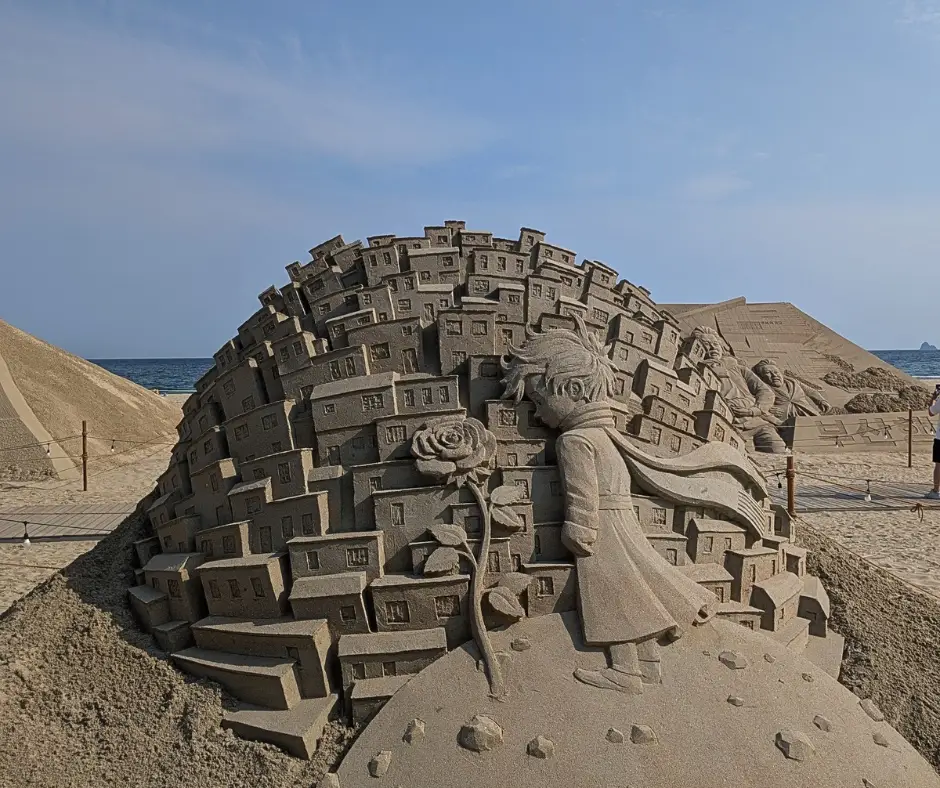
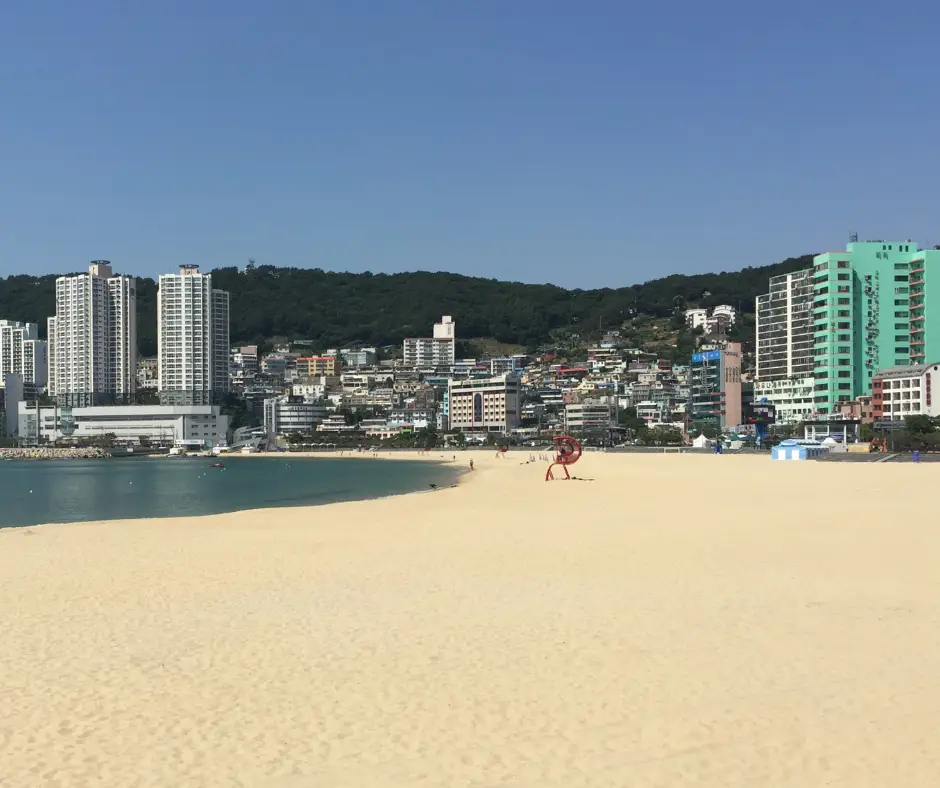
Haeundae is Korea’s most famous beach for a reason. When I first walked down to the shore and saw that wide sweep of white sand curving into the sea, backed by a glittering high-rise skyline, I immediately understood the hype. I also visited during a sand ‘castle’ (more like general designs) festival. Designs featured Busan and Korean history, pop culture references, animals, and more!
Stretching roughly 1.5 km along the coastline of Haeundae-gu, the beach is open and free year-round. During the official swim season (June 26–September 15 in 2026), lifeguards are on duty from 9:00 AM to 6:00 PM, and the beach comes alive with parasols, water sports rentals, and the constant hum of a city at play. Outside of swim season, it’s a completely different — and honestly more peaceful — experience.
Don’t leave Haeundae without walking the coastal trail around Dongbaek Island, a small, pine-covered peninsula at the western end of the beach. The views back across the beach from the island’s rocky tip are spectacular, and the APEC Nurimaru House — a striking modernist pavilion built for the 2005 APEC summit — sits right at the end.
Haeundae Beach | Admission: Free | Swim Season Hours: 9:00 AM–6:00 PM (June 26–September 15)
2. Gamcheon Culture Village
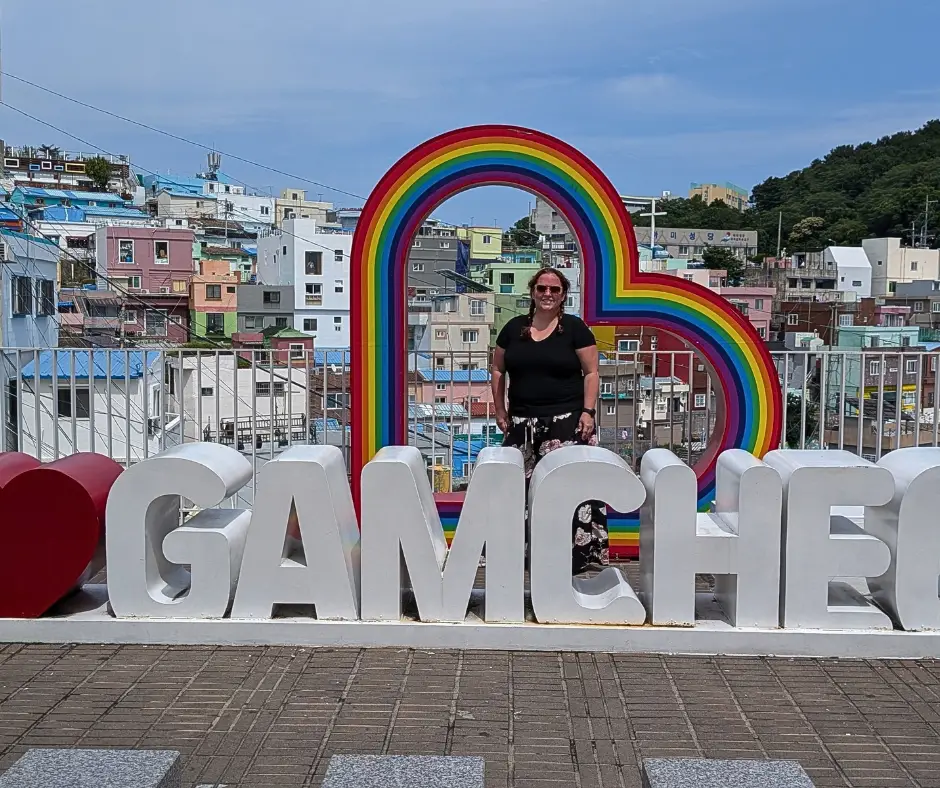
Nothing quite prepared me for the first moment I rounded a corner in Gamcheon and the whole village opened up below me — a cascade of pastel-painted houses tumbling down the hillside in every direction, murals poking out from unexpected walls, stairways disappearing into narrow alleyways, and the sea glittering in the distance. It’s one of those places that looks almost too good to be real.
Gamcheon was born out of necessity. During the Korean War, refugees from across Korea built this settlement on the steep hillside of Saha-gu using whatever materials they could find. The community was later revitalized in 2009 as a public art project, and the transformation has been extraordinary. It is now sometimes called the “Machu Picchu of Busan,” and while that nickname might sound like tourism hyperbole, it’s not entirely undeserved.
Pick up the stamp map from the information center for around ₩2,000 — it turns your visit into a self-guided scavenger hunt through the alleys, with 12 stamps to collect at murals and viewpoints, ending with two postcards as a reward. Keep an eye out for the iconic Little Prince and Fox sculpture and the Haneul Maru sky observatory for the best panoramic views.
A heads-up: Gamcheon has been designated a Special Management Area because residents have complained about overcrowding and noise. Visitors are now asked to respect access hours of 9:00 AM to 6:00 PM in the residential zones. Arrive early on weekdays to beat the crowds, and please be mindful that real families still live here.
gamcheon.or.kr | Admission: Free | Hours: 9:00 AM–6:00 PM (Mar–Oct), 9:00 AM–5:00 PM (Nov–Feb)
3. Haedong Yonggungsa Temple
Every city has a place that stops you in your tracks. In Busan, for me, it was Haedong Yonggungsa. I honestly could not wait to see this temple, and it lived up to my expectations!
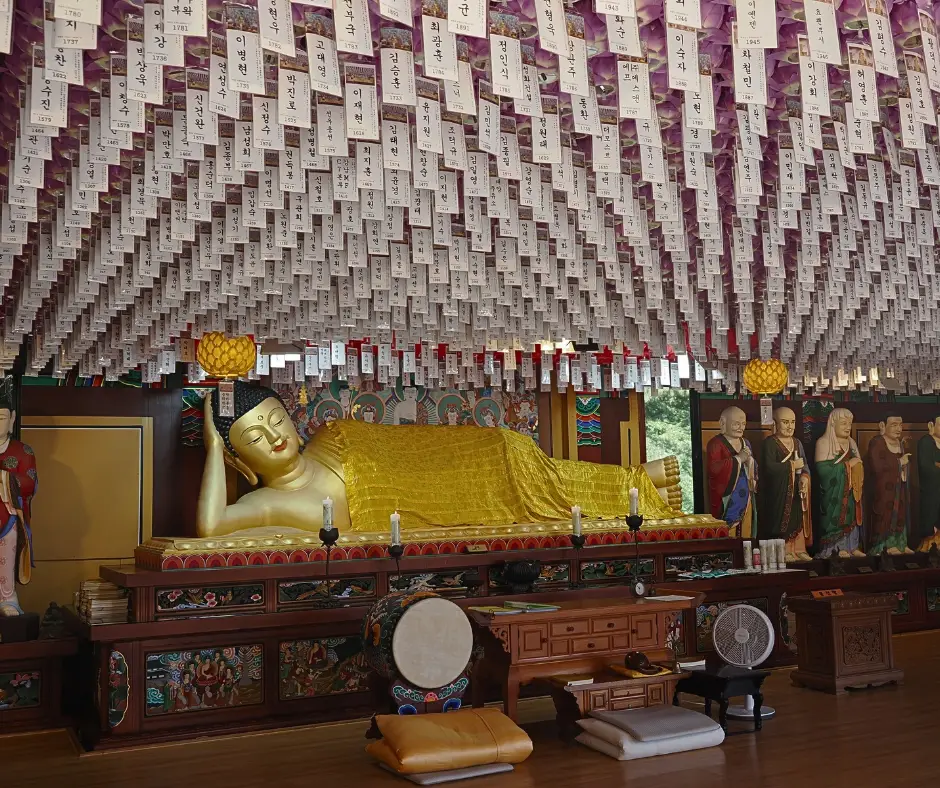
Unlike most Korean Buddhist temples, tucked into mountain valleys and forested hillsides, Haedong Yonggungsa sits directly on the sea—perched on a rocky headland on Busan’s northeastern coast, with waves crashing against the cliffs below. Founded in 1376 during the Goryeo Dynasty, the temple complex is a series of shrine halls, prayer grottos, and stone pagodas all arranged across the rocky shoreline, connected by a famous 108-step granite stairway that descends dramatically to the water.
We visited in the early afternoon, so it was crowded. If you want peace and quiet, the temple opens at 4:30 am, but in total honesty, my trip was jam-packed, and I did not have the energy to wake up that early. However, I wish I did. The golden light, the quiet, and the views- I can only imagine the peace I would’ve found that early.
My suggestion is to take a break from the tech – put down the phone and camera. Listen to the chanting and prayers, look at the lanterns, and just be. It’s easy to get swept in the crowds, trying to see it all, catch it all on camera, and forget the emotions and feelings you have while there.
Entry is free, and it’s open every day of the year. Parking is available on-site (charged, card only: ₩2,000 for the first 30 minutes, ₩500 per additional 10 minutes). If you’re going by public transport, take Bus 181 from Haeundae Station Exit 7 — it’s about a 45-minute ride.
Haedong Yonggungsa | Admission: Free | Hours: Daily 4:30 AM–7:20 PM (last entry 6:50 PM)
4. Gwangalli Beach & the Gwangan Bridge
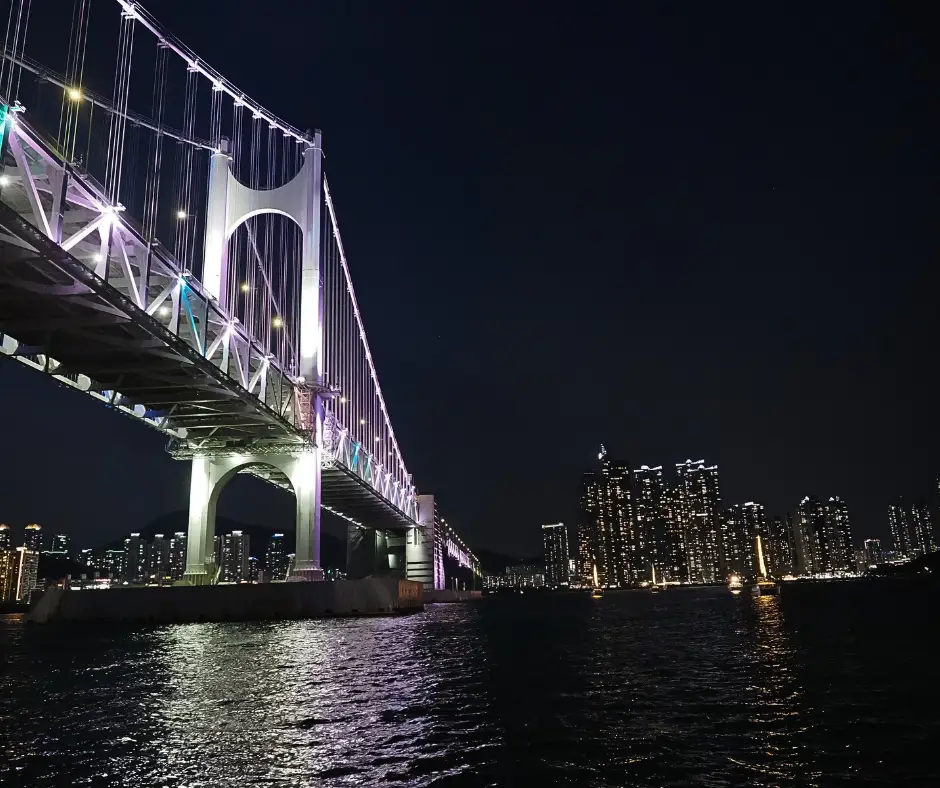
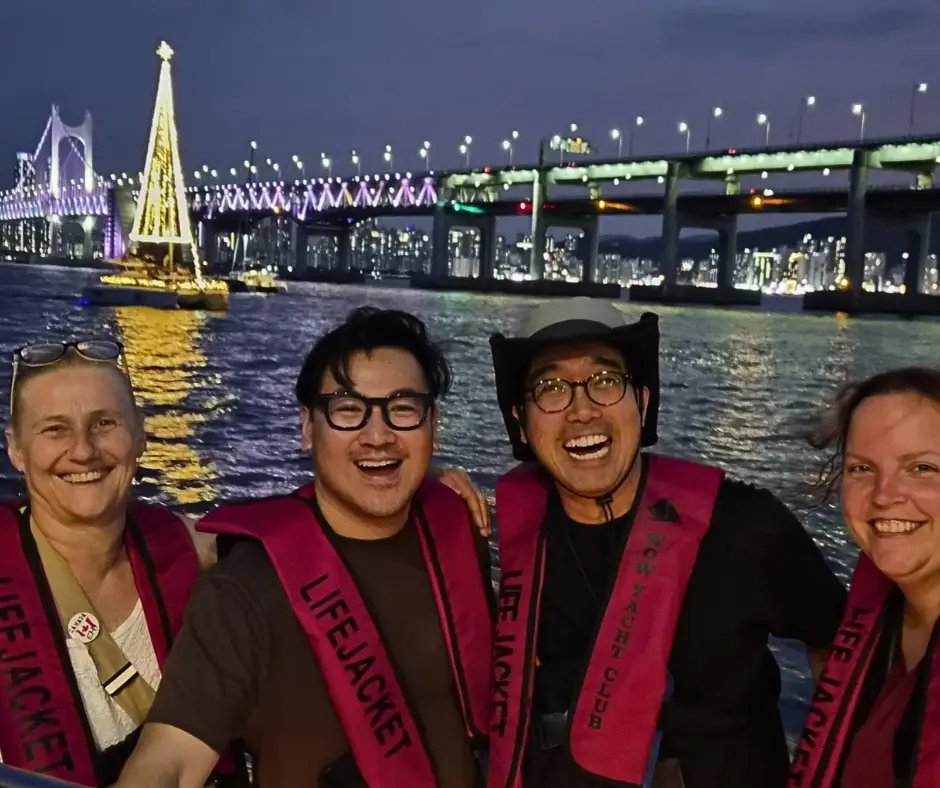
If Haeundae is Busan’s Times Square, Gwangalli is its Brooklyn. It’s hipper, a little more low-key, and absolutely dripping in atmosphere — especially after dark, when the Gwangan Bridge lights up in vivid LED colors across the entire 7.42 km span, reflecting off the water in a shimmering neon stripe.
The beach itself is narrower and more intimate than Haeundae, with a strip of rooftop bars, third-wave coffee shops, and restaurants on one side. I spent an evening here nursing an Aperol Spritz on a rooftop while the bridge changed colors in the background and thought: this is it. This is why people travel.
Every Saturday evening at 8:00 PM, a free drone light show launches over the water — 500+ drones choreographed into formations and sky paintings over the bay. Arrive by 7:30 PM to snag a good spot on the sand or a rooftop table. Just down the road, Millak Raw Fish Town is a maze of seafood restaurants where you can point at live fish in tanks and have them turned into sashimi within minutes.
If you’re not there on a Saturday, like me, you can get out on the water to enjoy the city views. Many of the yacht and catamaran tours include a small synchronized fireworks display on the water. These tours usually last about an hour and start around sunset. So you’ll get incredible sunset views at the beginning and see the Gwangan Bridge lit up in all its glory at the end.
Gwangalli Beach | Admission: Free | Swim Season Hours: 9:00 AM–6:00 PM (July 1–August 31)
5. Beomeosa Temple & Geumjeongsan Fortress Hike
If you’re looking for a break from the city, this day hike is exactly what you’re looking for. It has everything — ancient history, stunning architecture, forest trails, mountain fortress walls, and the reward of black goat BBQ and makgeolli at the end.
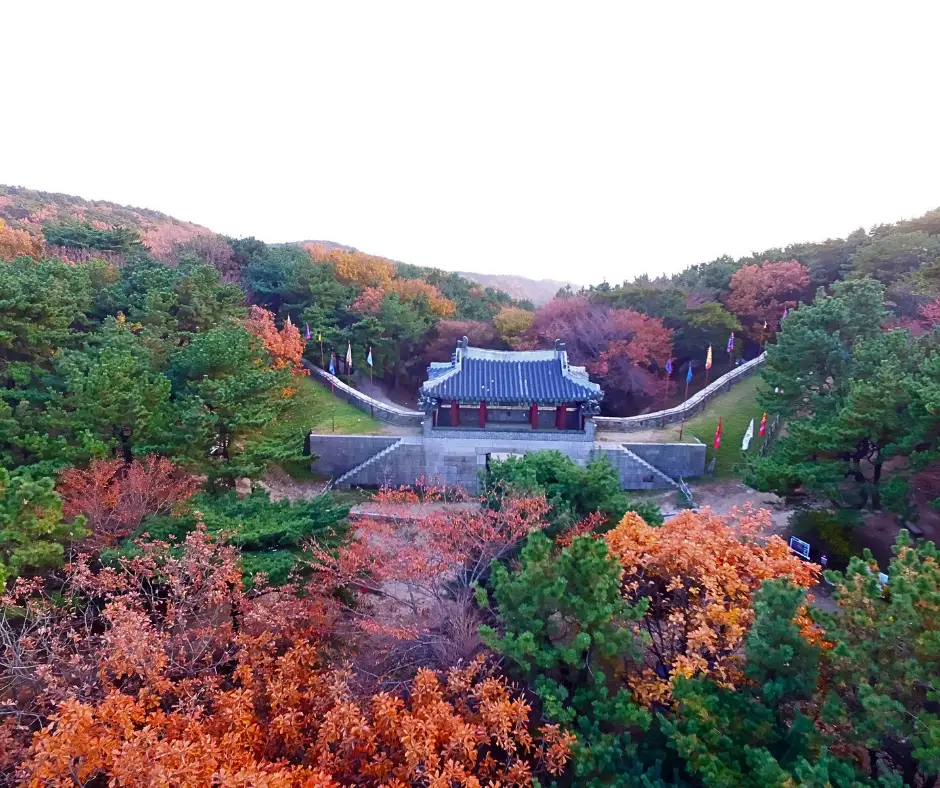
Beomeosa Temple, founded in 678 CE during the reign of King Munmu of Silla, is one of Korea’s five great Seon (Zen) Buddhist temples. The complex sits in a forested valley on the slopes of Geumjeongsan Mountain, and its wooden halls, moss-covered stone lanterns, and ancient ginkgo trees feel genuinely removed from the 21st century. Entry is free, and even on a busy weekend, the atmosphere stays calm and contemplative.
From the temple, trails wind up through pine forest to the gates of Geumjeongsan Fortress — the longest mountain fortress in Korea, its stone walls stretching over 17 km around the summit ridge. The views from the North Gate and the Godangbong summit are extraordinary, looking out over Busan’s urban sprawl, the sea beyond, and on clear days, Japan’s Tsushima Island in the distance.
For a truly memorable experience, book a templestay at Beomeosa — overnight programs are available and offer a rare, intimate look at monastic life.
Beomeosa Temple Official Site | Admission: Free | Hours: Open daily
6. Jagalchi Fish Market
There are fish markets, and then there is Jagalchi. Korea’s largest seafood market has operated in one form or another since 1889, and stepping inside for the first time is a full sensory assault—in the best possible way.
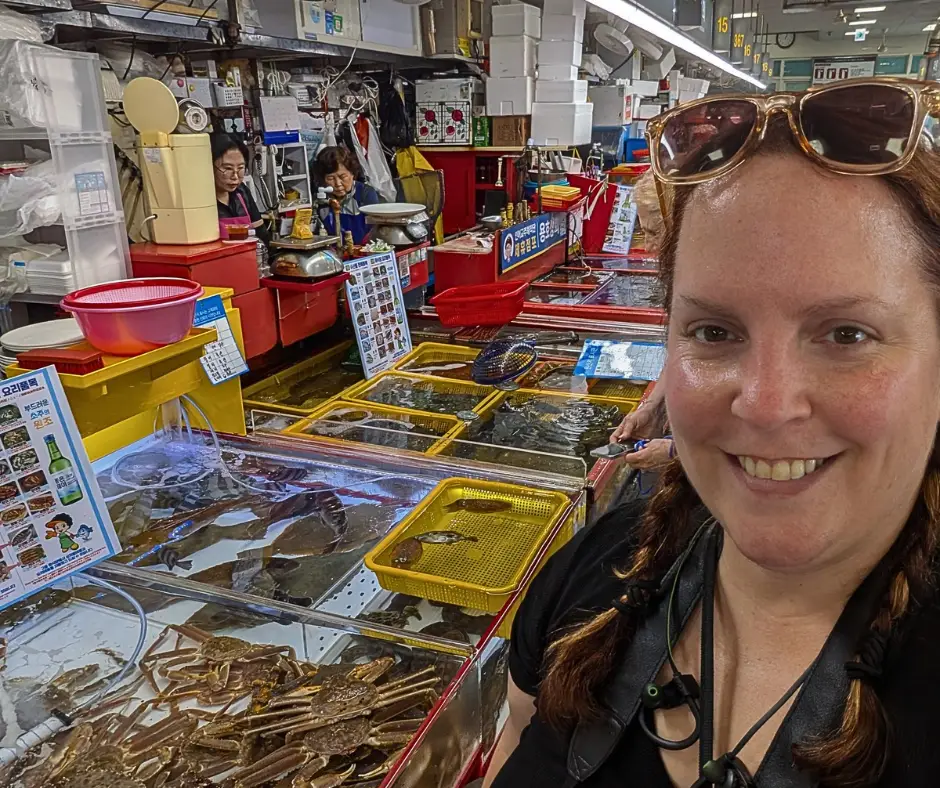
The ground floor is a labyrinth of tanks and ice beds packed with every sea creature imaginable: giant king crabs, abalone, octopus, sea cucumbers, live flounder, spiny lobsters, and things I still can’t identify with confidence. The Jagalchi Ajumma — the legendary female vendors who run the market stalls with sharp salesmanship and genuine warmth — are as much a part of the experience as the seafood itself.
The best way to do it: choose your fish downstairs, negotiate a price, and have it prepared and served right there on the upstairs restaurant floor. Or take a tour of Jagalchi Market and enjoy fresh seafood for dinner!
Feel free to ask the vendors questions and take pictures of the seafood. Combine Jagalchi with the nearby Gukje International Market and BIFF Square for a full half-day in the Nampo-dong area.
Jagalchi Market | Admission: Free | Hours: Daily 5:00 AM–10:00 PM (individual vendors vary)
7. Taejongdae Resort Park
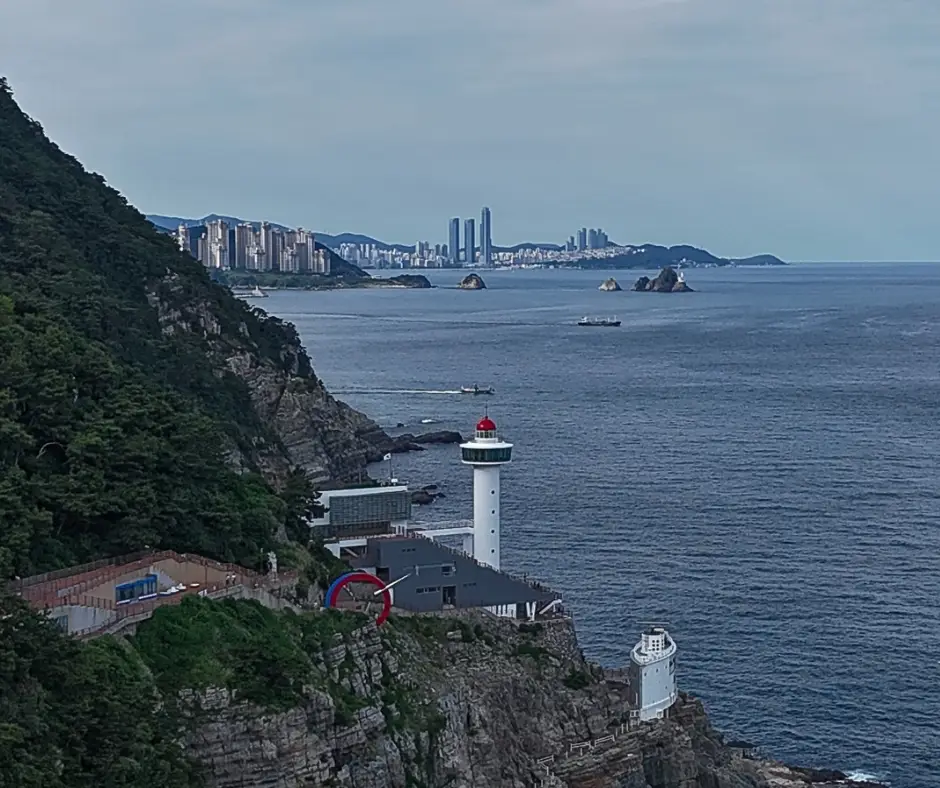
At the very southern tip of Yeongdo Island, where Busan runs out of land and the sea takes over, you’ll find Taejongdae — one of the most dramatic natural viewpoints in the city.
The park is a headland of sheer sea cliffs, dense pine forest, and coastal viewpoints wrapped around a 4.3 km loop road. At its heart sits a lighthouse built in 1906, still operational, with a sea deck that juts out over the cliffs for vertiginous views of the open ocean and, on very clear days, all the way to Japan. The pebble beach below the cliffs is one of those places where you sit, stare at the horizon, and feel genuinely small in the best way.
Entry to the park is free. To get around the loop, you can walk (2–3 hours at a comfortable pace; wear good shoes—there are real hills) or ride the Danubi Train, a cheerful road train that stops at the main attractions. As of 2026, the original Danubi Train is undergoing safety checks, and a free shuttle bus is operating in its place — check the official site for the current situation before you visit. Note that the lighthouse and coastal areas close at around 8:00 PM even though the park itself is open until midnight.
bisco.or.kr/taejongdae | Admission: Free | Hours: 4:00 AM–Midnight (Mar–Oct), 5:00 AM–Midnight (Nov–Feb) | Danubi Train: Adults ₩4,000 round trip
8. Busan Fireworks Festival
I have seen fireworks shows on three continents, and the Busan Fireworks Festival is one that I still want to experience. I’m not even a huge fireworks fan, but my small fireworks show in front of the Gwangan Bridge showed me that they know their explosives.
Held on the last Saturday of October each year over the Gwangan Bridge, the show fires about 100,000 fireworks in a single 45-minute display, with the entire 7.42 km span of the bridge acting as the stage. Up to 1.5 million people line the waterfront at Gwangalli Beach, Haeundae, and every rooftop bar in between. The noise, the color, the sheer scale of it is overwhelming in the most wonderful way.
It is completely free to attend. The best viewing spots are directly on Gwangalli Beach (arrive by mid-afternoon for a prime position), the Haeundae Beach waterfront, or a rooftop bar overlooking the water — which should be booked weeks in advance. Book your accommodation for this weekend as far ahead as possible; the city sells out fast, and prices spike significantly.
Busan Fireworks Festival Official Site | Admission: Free | Date: Last Saturday of October annually
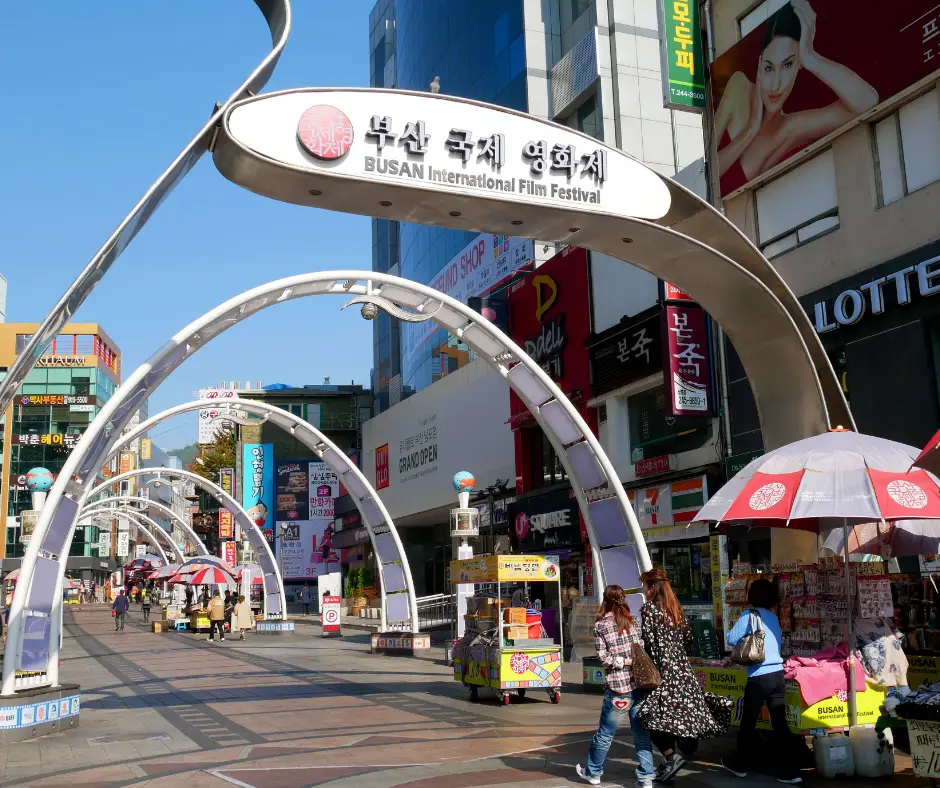
9. Busan International Film Festival (BIFF) & BIFF Square
Established in 1996, BIFF is Asia’s premier international film festival and one of the world’s top five film festivals. For ten days each autumn, the city transforms — red carpets unfurl along the waterfront, Korean and international film stars arrive, and the streets around Haeundae and the Busan Cinema Center buzz with film screenings, industry events, and celebrity sightings. Tickets for public screenings are very affordable (typically a few thousand won), and the atmosphere is electric. If you’re visiting during this time, be sure to book accommodation very early.
The Busan Cinema Center itself is worth visiting even outside of festival season. The building’s architecture is genuinely jaw-dropping — it features the world’s longest cantilevered LED roof, which illuminates in enormous, programmable light shows at night. Free outdoor screenings happen on the plaza regularly throughout the summer.
In the Nampo-dong district, BIFF Square has a permanent Walk of Fame with handprints from Korean cinema’s biggest stars set into the pavement. It’s fun to hunt down your favorites!
BIFF Official Site | BIFF: Annual, late September–early October | BIFF Square: Free | Busan Cinema Center: Varies by screening
10. Lotte Giants Baseball at Sajik Stadium
If you’re in Busan between late March and October, do yourself a favor and go to a Lotte Giants game at Sajik Stadium. Korean Baseball Organization (KBO) games are one of Asia’s great, underrated travel experiences, and the Lotte Giants have some of the league’s most passionate fans.
The 28,500-seat stadium holds the kind of organized chaos that makes sport genuinely joyful to watch — dedicated cheer sections with synchronized chants for every batter, entire sections of fans wearing matching orange plastic bag hats (a Lotte Giants tradition), cheerleaders dancing between innings, and fried chicken delivered directly to your seat. Tickets start at around ₩10,000—making this one of the best-value evenings anywhere in the city.
Lotte Giants Official Site | KBO Season: Late March–October | Tickets: From ~₩10,000 | Hours: Evening games typically start at 6:30 PM
11. Songdo Cable Car (Busan Air Cruise) & Songdo Beach
Songdo Beach is the oldest officially designated public beach in Korea, open since 1913. Combined with the Busan Air Cruise — a 1.62 km aerial cable car that sweeps across the bay up to 86 meters above the water — it makes for one of the most fun and visually stunning half-days in the city.
If you’re not afraid of heights (like me), choose the Crystal Cruise glass-bottom cabin and spend the entire ride with your face pressed to the floor panel, watching the water and rocky coastline scroll beneath your feet. The views up the coast toward Amnam Park and back over Songdo’s retro beach strip are fantastic. Once you’re down the other side, walk the free Songdo Skywalk — a 365-meter boardwalk that extends over the sea from the cliffside — for even more vertigo-inducing ocean views.
Busan Air Cruise Official Site | Hours: Weekdays 9:00 AM–9:00 PM, Weekends 9:00 AM–10:00 PM | Admission: Standard cabin ₩15,000 one way / ₩20,000 round trip; Crystal (glass-bottom) cabin ₩20,000 one way / ₩25,000 round trip
12. Spa Land & Busan’s Hot Spring Culture
Busan sits atop natural geothermal hot springs, and the city’s jjimjilbang (Korean sauna and bathhouse) culture is deep-rooted, stretching back over 1,300 years to the ancient Dongnae hot spring district.
For a luxurious, full-day experience, head to Spa Land inside Shinsegae Centum City — yes, the same building that holds the world’s largest department store. Spa Land is extraordinary: 22 thermal pool zones, 13 themed sauna rooms (Roman-style, salt caves, red clay rooms, Himalayan salt rooms, and more), all fed by natural geothermal water. The entry fee includes a set of shorts and a T-shirt for the communal areas. Plan to spend a full afternoon here.
For something more historic, the Dongnae Oncheonjang district offers traditional bathhouses that have operated for generations. Heosimcheong Spa in the same neighborhood is one of the world’s largest hot spring bathhouses and a popular local favorite.
A few key tips: shoes off at the entrance, separate male and female bathhouse areas (swimwear is not worn in the bathing pools — it’s communal bathing, Korean-style), and spend as long as you want in the communal sauna areas in your provided loungewear. It’s one of Korea’s most genuinely restorative experiences.
Spa Land Centum City | Hours: Daily 6:00 AM–Midnight (last entry 10:00 PM) | Admission: Adults ₩18,000 (weekday) / ₩21,000 (weekend); prices vary with time of day
13. Blueline Park: Sky Capsule & Haeundae Beach Train
This one is pure joy, and it’s one of the most Instagrammable experiences in the city — which I say as someone who usually rolls their eyes at that description.
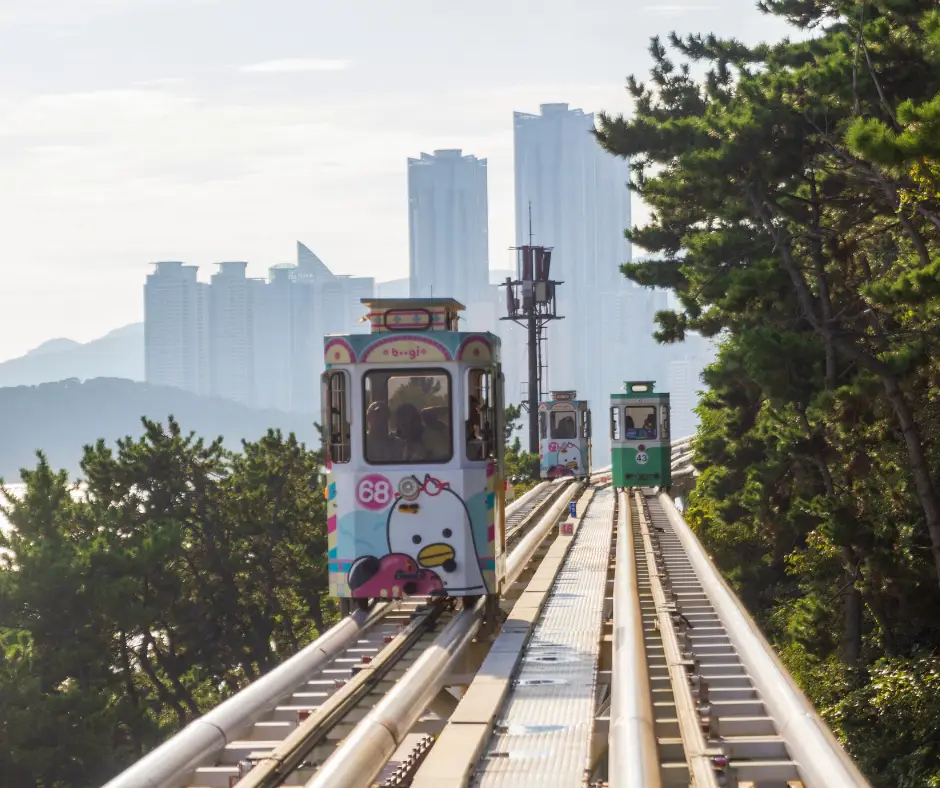
Blueline Park runs along a former coastal rail line repurposed into one of Korea’s most scenic leisure railways. The route stretches from Mipo (at the eastern end of Haeundae) to Songjeong, hugging the shoreline the entire way with uninterrupted ocean views.
You can ride it two ways: the Sky Capsule—brightly colored, glass-fronted elevated pods on a raised rail that hold 2–4 people—is the more premium option, giving you a bird’s-eye view over the coast. Or the Haeundae Beach Train is a battery-powered open-air train at beach level, the more leisurely and budget-friendly choice. Reserve your Sky Capsule tickets on the official site in advance, especially on weekends; they sell out fast.
Blueline Park Official Site | Hours: Vary by season, generally 9:00 AM–6:00 PM | Sky Capsule: from ₩35,000 per capsule (2 people) | Beach Train: from ₩8,000
14. Skyline Luge Busan
If you’re traveling with family, a partner who loves a bit of an adrenaline kick, or you just want something genuinely fun, Skyline Luge Busan at the Osiria Tourism Complex is an excellent pick.
The Luge is a gravity-powered kart track built into a hillside with panoramic sea views — you steer a wheeled sled down a winding track at your own pace, riding the chairlift back up for another run. It’s open 365 days a year, suitable for all ages (kids can ride with adults), and genuinely more exhilarating than it looks. Three-ride packages start at around ₩30,000. The Osiria complex also includes Lotte World Adventure Busan and an Osiria Railbike — you could easily make a full day of it out here.
Skyline Luge Busan | Hours: Daily 10:00 AM–8:00 PM (hours vary seasonally) | Admission: 3 rides from ₩30,000
15. UN Memorial Cemetery
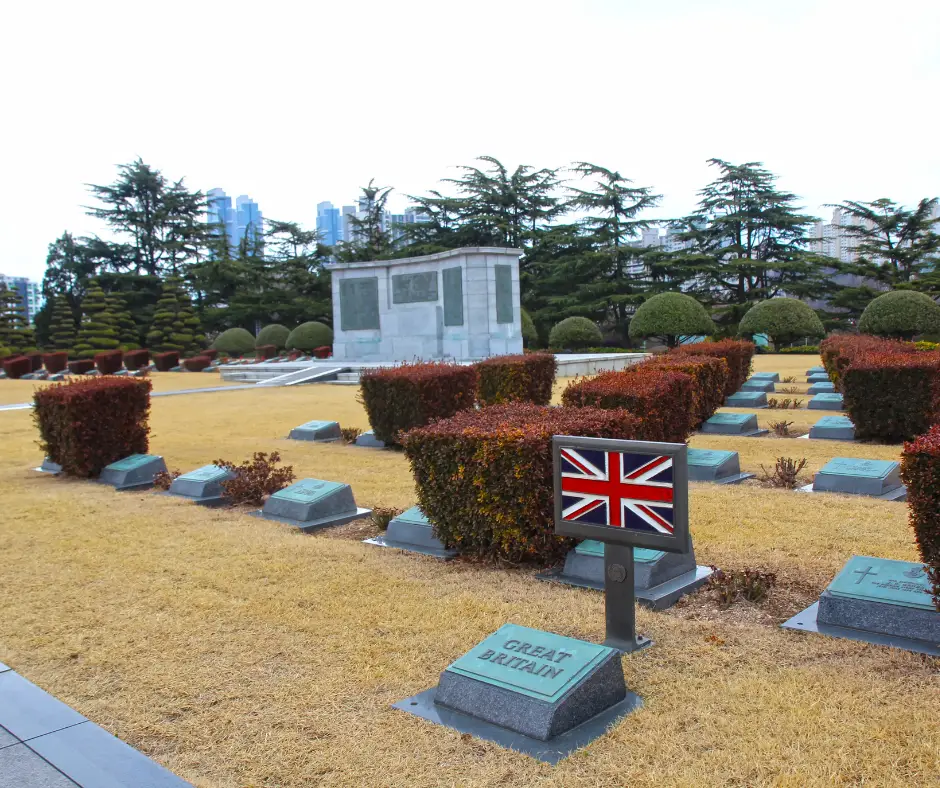
The UN Memorial Cemetery in Busan has a kind of quiet you won’t find anywhere else in the city. It is the only UN-designated war cemetery in the world — the final resting place of soldiers from 11 nations who gave their lives fighting in the Korean War.
Walking through the rows of headstones — some inscribed in Korean, some in English, others in Turkish, Greek, French, and Dutch — gives you a profound sense of the international stakes of a war that is sometimes called “the forgotten war.” The grounds are immaculately maintained, with reflecting pools, flower beds, and memorial pavilions that are as beautiful as they are sobering.
Entry is free. The cemetery is located near Daeyeon Station on Metro Line 2. I strongly recommend visiting on a quiet weekday morning and giving yourself at least an hour.
UNMCK Official Site | Admission: Free | Hours: Daily 9:00 AM–5:00 PM (March–October), 9:00 AM–4:00 PM (November–February); closed Mondays
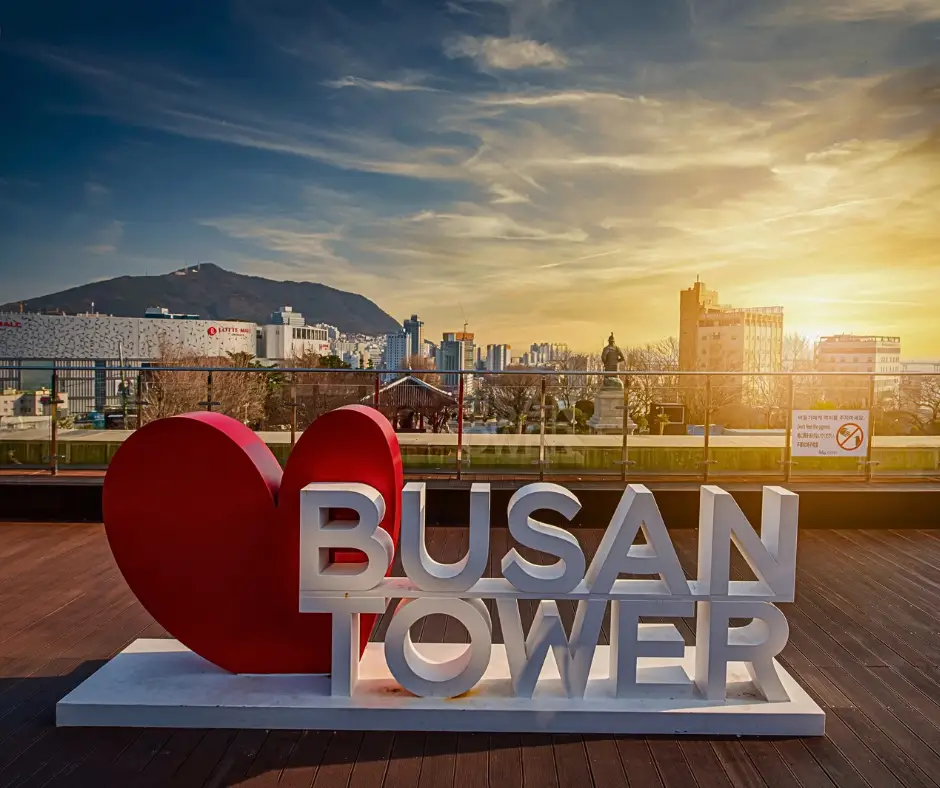
16. Busan Tower & Yongdusan Park
Rising 120 meters above Yongdusan Park in the heart of the Nampo-dong district, Busan Tower offers a sweeping 360-degree panorama of the city — the harbor to the south, the mountains to the north, and the dense urban sprawl spreading out in all directions.
It’s not the most modern observation tower you’ll ever visit (it was built in 1973), but that’s actually part of the charm. There’s something genuinely nostalgic about it, and the views are legitimately good — especially on a clear day when you can trace the entire coastline from the harbor to Haeundae. The tower sits within Yongdusan Park, a pleasant hilltop green space with a famous 18-meter bronze statue of Admiral Yi Sun-sin, a Korean naval hero, at its center.
Combine this with a walk through Gukje Market, a coffee at one of the independent cafes in the narrow alleys below the park, and a fresh oyster or two from Jagalchi, and you have a perfect downtown half-day.
Busan Tower | Hours: Daily 10:00 AM–10:00 PM | Admission: Adults ₩12,000
17. Surfing at Songjeong Beach
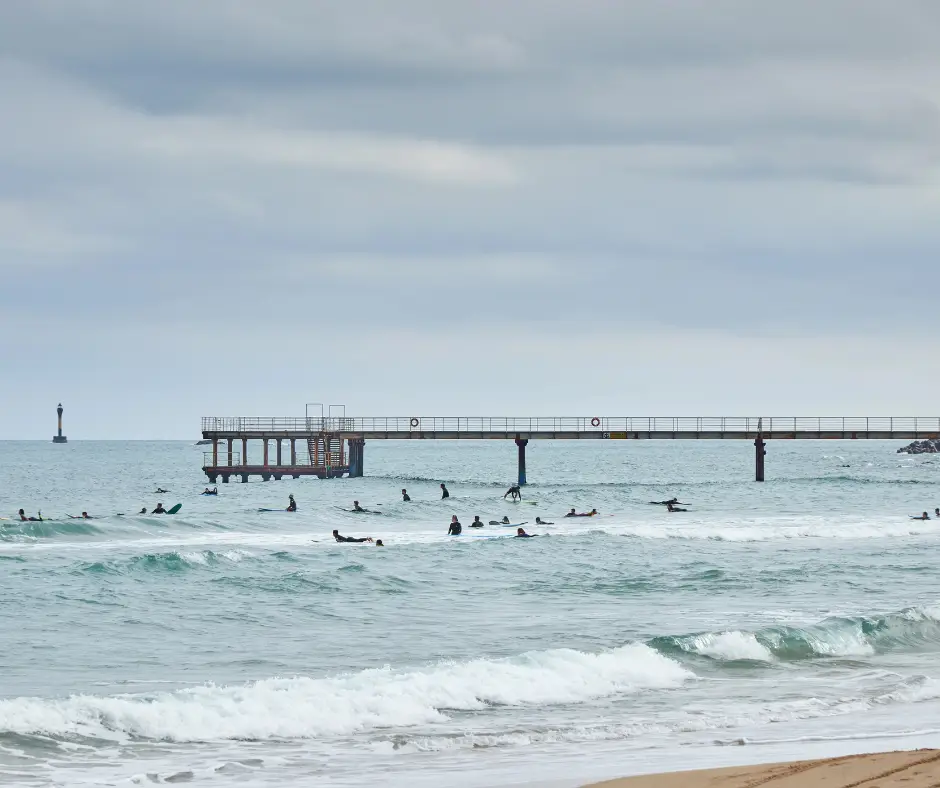
Surfing isn’t the first thing that comes to mind when I think of Korea, but it makes sense if you think about it. There’s actually a strong surfing culture along the coastline, with Busan being at the heart of it. Korea’s surfing culture began at Songjeong Beach, a sweeping crescent of sand on Busan’s northeastern edge, just a short train ride from Haeundae.
The beach has a gentle, consistent shore break, making it one of the country’s best beginner surf spots. Several established surf schools operate from the beach — Surfholic, Daysurf, and Uncle Surf are among the most popular — offering lessons for around ₩65,000, including board, wetsuit, and instruction. The best waves arrive with the autumn typhoon swells in September and October, when the more experienced surfers really come out to play.
Even if surfing isn’t your thing, Songjeong is a fantastic beach to visit outside of the peak summer rush. It’s quieter and more laid-back than Haeundae, with a strip of surf cafes, smoothie bars, and laid-back restaurants that give it the feel of a proper beach village rather than a resort strip.
Songjeong Beach | Surf School Lessons: From ~₩65,000 (board + wetsuit included) | Beach Access: Free | Swim Season: June 26–August 31
18. Gwangalli Drone Light Show
One of the most spectacular free experiences in all of Asia happens every single Saturday night above Gwangalli Beach. At precisely 8:00 PM, a fleet of 500+ synchronized drones launches above the bay and begins painting pictures in the night sky over the Gwangan Bridge — constellations, Korean folk art motifs, animated scenes, city silhouettes, all choreographed to music.
During special events like BIFF and the Fireworks Festival, the number of drones scales up to 1,000 or more. It’s one of those things that sounds slightly gimmicky until you watch it, and then it becomes genuinely awe-inspiring.
Get there by 7:30 PM to claim a spot on the beach or a rooftop bar seat. The show lasts around 20 minutes. It runs year-round, though it can be canceled in bad weather — check local announcements if you’re visiting in typhoon season.
Gwangalli Drone Show | Admission: Free | Time: Every Saturday at 8:00 PM
19. Gukje Market (International Market)
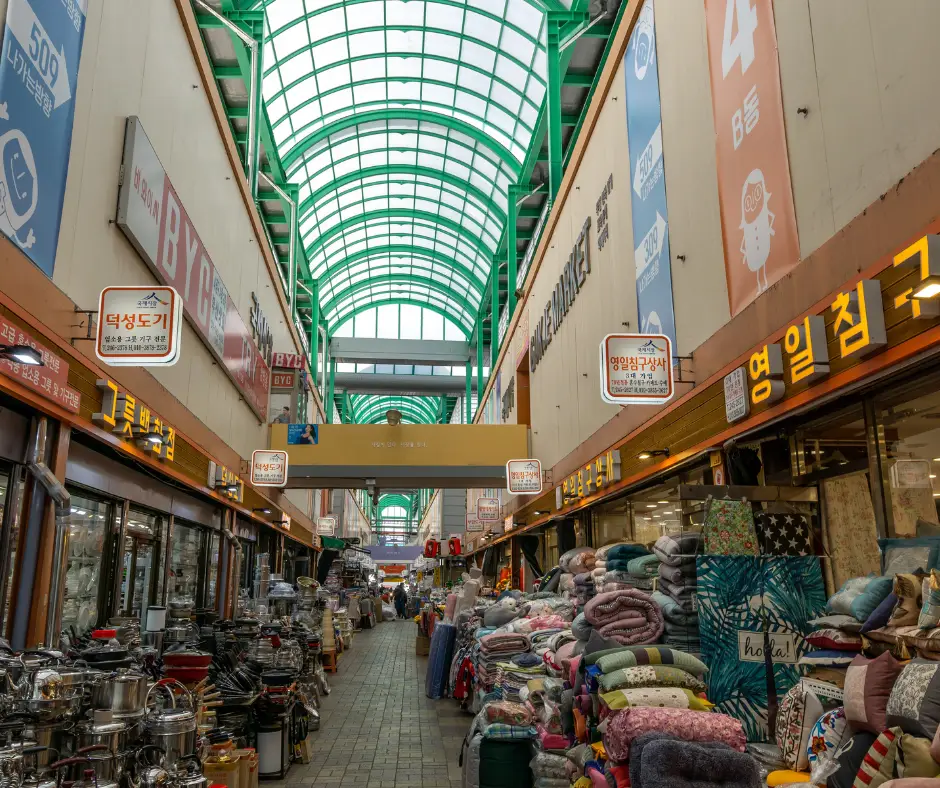
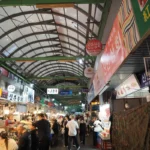
In the tangle of alleyways behind the Nampo-dong waterfront, Gukje Market — Korea’s largest traditional market — sprawls across multiple city blocks in a glorious, organized chaos of 1,500+ stalls.
The market was born in the aftermath of the Korean War, when refugees with no employment and no shelter set up makeshift stalls and started trading whatever they could get their hands on. Today, it sells everything from raw fabric and tailored clothing, imported goods, kitchenware, dried seafood, traditional handicrafts, and electronics, to street food that I would happily fly back to Korea for alone. The hotteok (sweet filled pancakes) from the stalls around the market perimeter is legendary. Don’t skip the adjacent Kkangtong Market for secondhand goods and vintage finds.
Visit Busan — Gukje Market | Admission: Free | Hours: Most stalls open 9:00 AM–8:00 PM (some close Monday)
20. Learn about the Sea Women (Haenyeo)
The haenyeo are female free divers who harvest seafood from the ocean floor — abalone, sea urchin, conch, octopus, seaweed, and more — without the aid of breathing equipment, diving to depths of up to 10 meters (30 feet) and holding their breath for up to two minutes at a time. What makes the haenyeo truly unique is not just the physical skill involved, but the matriarchal social structure that grew around them.
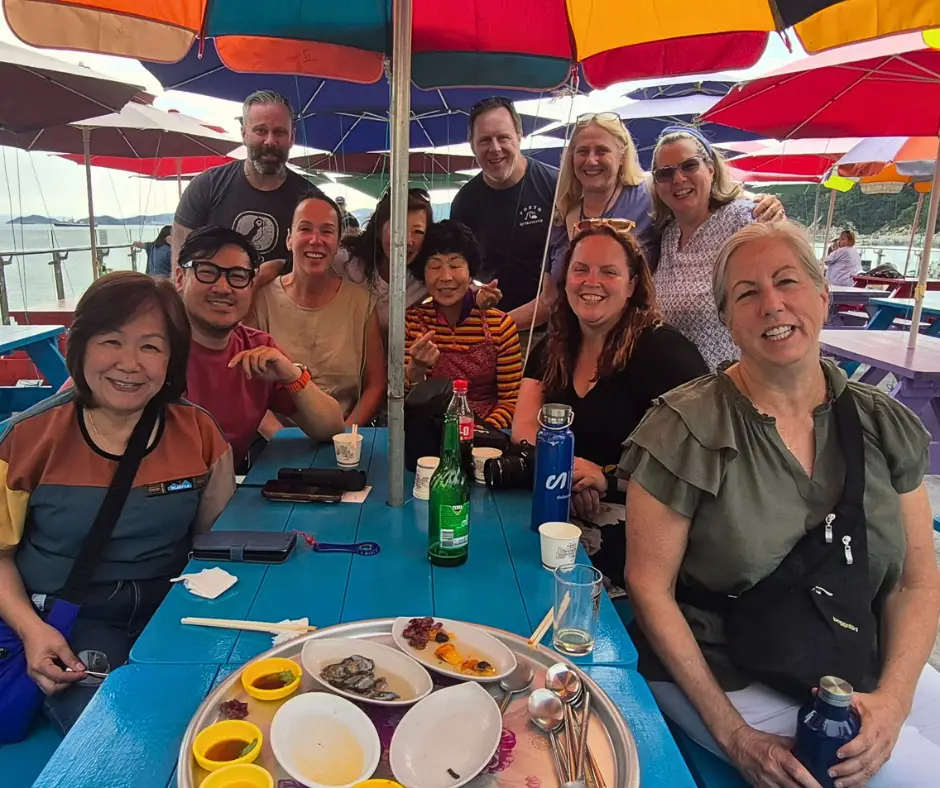
They became famous recently because of the book “The Island of Sea Women” by Lisa See. The book is fictional, but the women are real. During my trip with Intrepid, we met a 70-year-old diver and learned about her experience and life. It was incredible and powerful. Then she shared her catch with us, and we got to try a bunch of fresh seafood.
Even if you don’t get to meet one, I highly recommend visiting the Busan Haenyeo Cultural Center. You’ll learn about the impressive skills these women have passed down through generations for over 1,500 years. The tradition is strongly associated with Jeju Island, but these communities have existed along the southeastern coastline of Korea (including Busan) for centuries.
Busan Haenyeo Cultural Center | Admission: Free | Hours: Tuesday–Sunday 9:00 AM–6:00 PM (closed Mondays and public holidays)
21. Day Trip to Gyeongju
No trip to southeastern Korea is truly complete without at least one day in Gyeongju — the ancient capital of the Silla Kingdom (57 BCE–935 CE) — and from Busan, it couldn’t be more accessible. The KTX bullet train gets you there in just 28 minutes from Busan Station for around ₩11,000 each way.
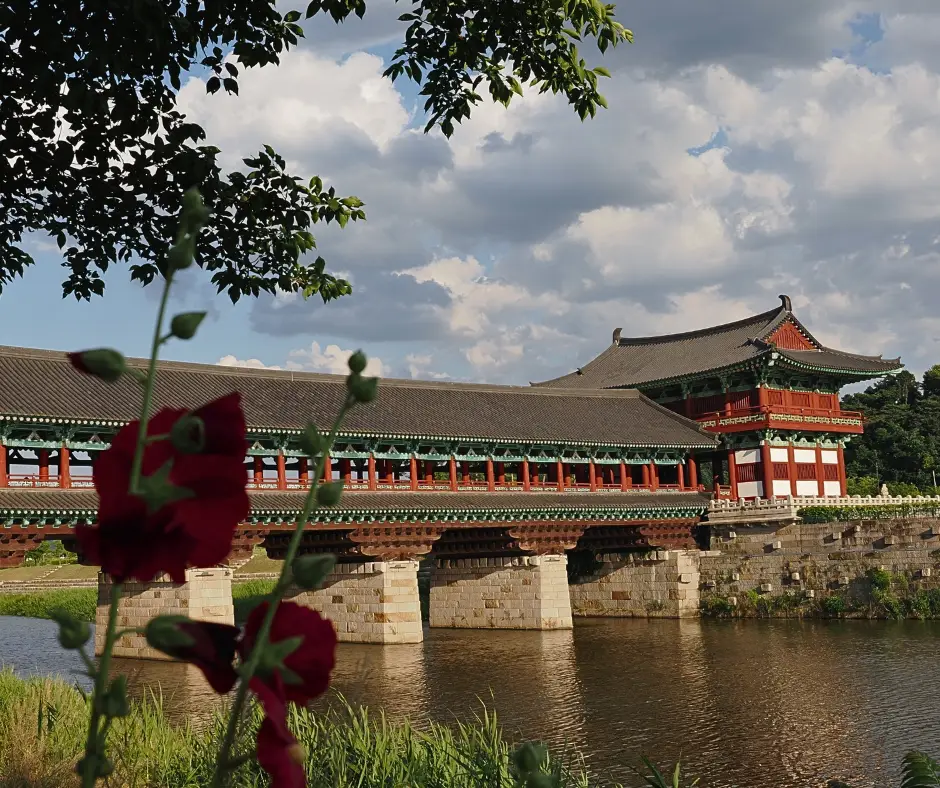
Gyeongju is often called an “open-air museum” — a sprawling ancient city where UNESCO World Heritage sites are genuinely around every corner. The Bulguksa Temple complex (a masterpiece of 8th-century Buddhist architecture), the Seokguram Grotto (a stone-carved Buddha enshrined in a hilltop cave), and the covered Woljeonggyo Bridge are some of the main attractions. The Tumuli Park burial mounds — enormous grassy tumuli rising from the middle of the modern city like green whales — are profoundly strange and beautiful. In the evening, the Anapji Pond complex reflects the reconstructed Silla palace pavilions in its still water, creating one of Korea’s most hauntingly beautiful scenes.
Budget a full day, catch a late KTX back to Busan, and be sure to try ssambap (rice and vegetable wraps) and gyeongju bread (a pastry filled with sweet red bean) before you leave.
Gyeongju | KTX from Busan Station: ~₩11,000 one-way (~28 minutes) | Bulguksa Temple Admission: Adults ₩6,000
Practical Tips for Visiting Busan
Getting there:
- From Seoul, the KTX bullet train from Seoul Station or Suseo Station to Busan Station takes approximately 2 hours 15 minutes (from ~₩59,800 standard class). It’s faster, more comfortable, and more scenic than flying.
- Alternatively, Gimhae International Airport (PUS) receives direct international flights from across Asia and connects to the Busan Metro via the Gimhae Light Rail Transit.
Getting around:
- The Busan Metro (4 lines) is clean, affordable, and covers all the major attractions. A T-money card (rechargeable contactless card, also valid on buses and the national rail) is essential.
- City buses reach spots the metro doesn’t — especially Taejongdae, Gamcheon, and the eastern coastal beaches.
- Taxis are cheap by Western standards and easy to hail; most drivers use navigation apps, so showing your destination in Korean text or on Naver Maps works well.
Where to stay:
- Haeundae — best for beach access, upscale hotels, and the BIFF festival crowd
- Seomyeon — central location, great nightlife, wide range of accommodation budgets
- Gwangalli/Millak — for the vibe, the nightlife, and that bridge view from your window
Must-try foods:
- Dwaeji gukbap (pork and rice soup) — Busan’s iconic breakfast dish, eaten with fermented kimchi and shrimp paste on the side
- Milmyeon — cold wheat noodles in a chilled broth, a Korean War–era Busan invention
- Hoe (raw fish) — fresh from Jagalchi, served over rice or with soju
- Eomuk (fish cake) — Busan’s beloved street food, skewered and served in broth from pojangmacha stalls everywhere
- Hotteok — sweet, crispy-edged pancakes filled with brown sugar and cinnamon syrup
Final Thoughts
Busan has a way of getting under your skin. It’s a city that rewards slow travel — the kind where you wander without a plan, duck into a pojangmacha for a skewer and a beer, stumble onto a temple at sunset, or find yourself on a beach at midnight with the bridge lights reflecting in the water and nowhere else you’d rather be. Although I only had a few days in Busan, I ache to go back. I don’t feel comfortable in many major cities, let alone want to revisit them, but Busan is one of them.
Whether you’re here for five days or five weeks, whether you want white sand beaches or mountain fortress hikes, world-class cinema or the freshest raw fish you’ve ever tasted — Busan delivers. Every single time.
Have you been to Busan? Is there a spot I’ve missed that deserves a place on this list? Drop it in the comments — I’m already looking to go back! 🌊
Save “Best Things to Do in Busan” for Later


About the Author
Read More About Asia


Have You Seen These Yet?


Hey there! I’m Pamela. Just a woman who has fallen in love with getting lost around the world. I’ve traveled to 42 countries across 7 continents.
My mission? To inspire you to ‘let the bucket list flow’ and see what the world has to offer.
My promise: All of my photos are not edited. What you see is what you get.
Join a small-group safari to Kenya & Uganda!
- Go trekking and get close to gorillas and chimpanzees
- See the big 5 Safari Animals
- See The Great Migration
- Sunrise hot air balloon ride and champagne breakfast included
- Maximum of 12 guests
Capital Cities book
- Discover the world through this 258 page book covering 118 cities
- 3 photos by me!
- Perfect as a gift or for your coffee table
Travel Shop
- Accommodation Comparison Excel
- Printable Bucket Lists
- Travel Planning Resources
- & More!
Leave a Reply