

How to See a Shoebill in Uganda
Africa, Uganda / August 7, 2026 / Be the first to comment
I’ll be honest: I usually go on safaris for the big cats. Give me a lion pride or a cheetah on the hunt, and I’m happy. But in Uganda, there is a creature that rivals even the most majestic feline for sheer “wow” factor. It looks prehistoric, it stands as tall as a child, and it has a beak that looks like a Dutch clog.
I’m talking, of course, about the Shoebill, also affectionately known as the dinosaur bird. How to see a shoebill is an adventure in itself!
Finding this bird isn’t as simple as driving through a savannah. It requires a venture into the wetlands. Even if you’re like me and not a bird aficionado, the adventure to the Shoebill is worth it. I booked the 1-Day Best of Mabamba Shoebill Bird Watching Tour with Nungi Safaris. If you are in Kampala or Entebbe and have a free day, this is non-negotiable.
This post is not sponsored – and is my personal experience.
This post contains affiliate links. This means if you purchase something from a link, I may make a small commission, at no cost to you. This helps me keep the site running and free.
If you like this post, be sure to sign up for my e-mail list for travel inspiration & tips, or connect with me on Facebook, Instagram, Twitter, BlueSky, Threads, or Pinterest. I also have a Facebook group where you can ask me anything travel related – and I share travel deals!
Plan Your Trip to Uganda
Frequently Asked Questions about Spotting the Shoebill
What is a shoebill stork, and is it actually a stork?
Despite the common nickname “shoebill stork,” the shoebill (Balaeniceps rex) isn’t a true stork. It’s its own distinct species (often grouped with pelicans/herons in modern classifications).
Where can you see shoebills in the wild?
Shoebills live in large freshwater wetlands and papyrus swamps in parts of East-Central Africa. So, Uganda’s papyrus swamp areas (Mabamba Swamp is known for the shoebills), Zambia’s wetland systems, South Sudan, and parts of western Tanzania
When is the best time to see a shoebill?
Since you’re going into wetlands, you want to visit in the dry season so the water levels are easier to navigate. Once you get to the destination, you have to get up early to spot the birds in the morning, when they are most active!
Are shoebills dangerous to people?
Shoebills aren’t a typical “tourist danger” like big cats or elephants. Generally, they stand still and keep their distance. But their bills are powerful, so be sure to follow your guide’s distance rules. Never try to approach on foot in the swamp. Try to remain quiet and avoid sudden movements.
How to See a Shoebill in Uganda: The Experience
The Early Start
The tour description said “early morning,” and they meant it. Amos picked me up from 2Friends Beach Hotel in Entebbe around 7 am, right after the sun began to rise. The logic is simple: birding is best when the air is cool, and the Shoebills are most active in the morning before the heat sets in.
The drive to the Mabamba Swamp ferry point took about forty minutes. It’s a fascinating drive through the waking Ugandan countryside—kids in uniforms walking to school, bodabodas (motorcycle taxis) weaving through traffic, and the people of Entebbe getting ready to start their busy day.
Travel Tip: Pack sunscreen! There is limited shade on the boats. I didn’t have any since my luggage got stuck in Istanbul, and it was my first day in Entebbe. (I got my luggage the next day, but did have to cover up on the boat!)
Crossing the Lake
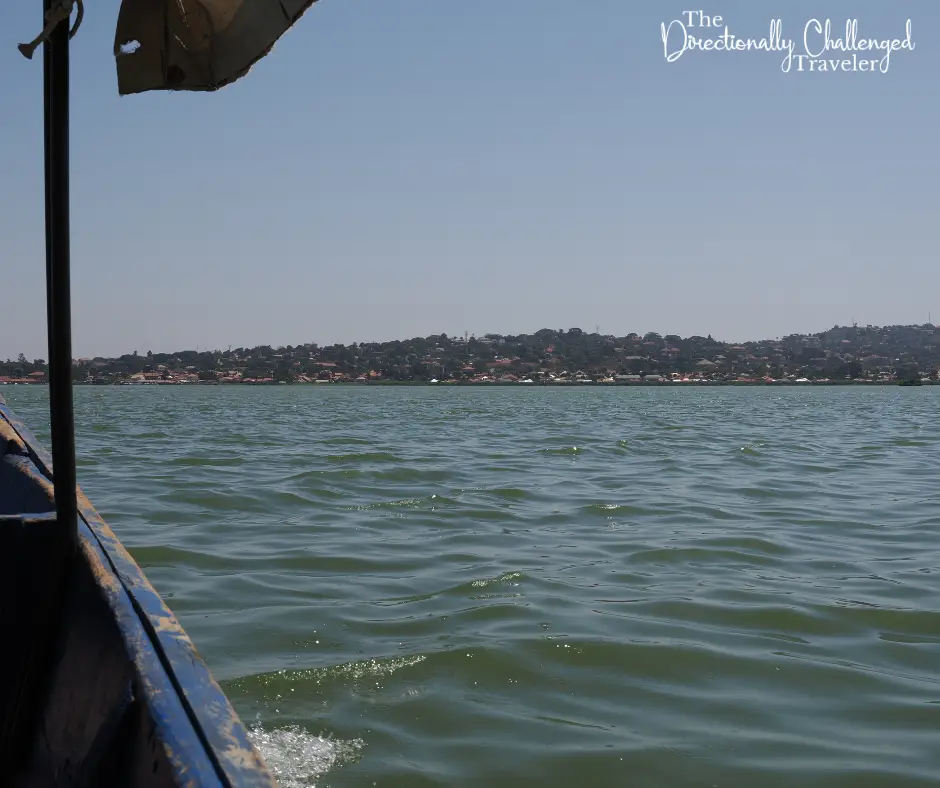
We had to cross Lake Victoria to get to Mabamba Bay and then the swamp. Lake Victoria is the second-largest freshwater lake in the world, the largest in Africa. The first boat was a small, motorized boat, so we could cross quickly. With the sun glistening off the water and the breeze in my hair, I couldn’t think of a better way to start my time in Uganda.
Into the Swamp
When we arrived at the landing site, the vehicle changed. We swapped the motorized boat for a traditional wooden canoe. These long, slender boats are perfect for navigating the narrow channels of the swamp.
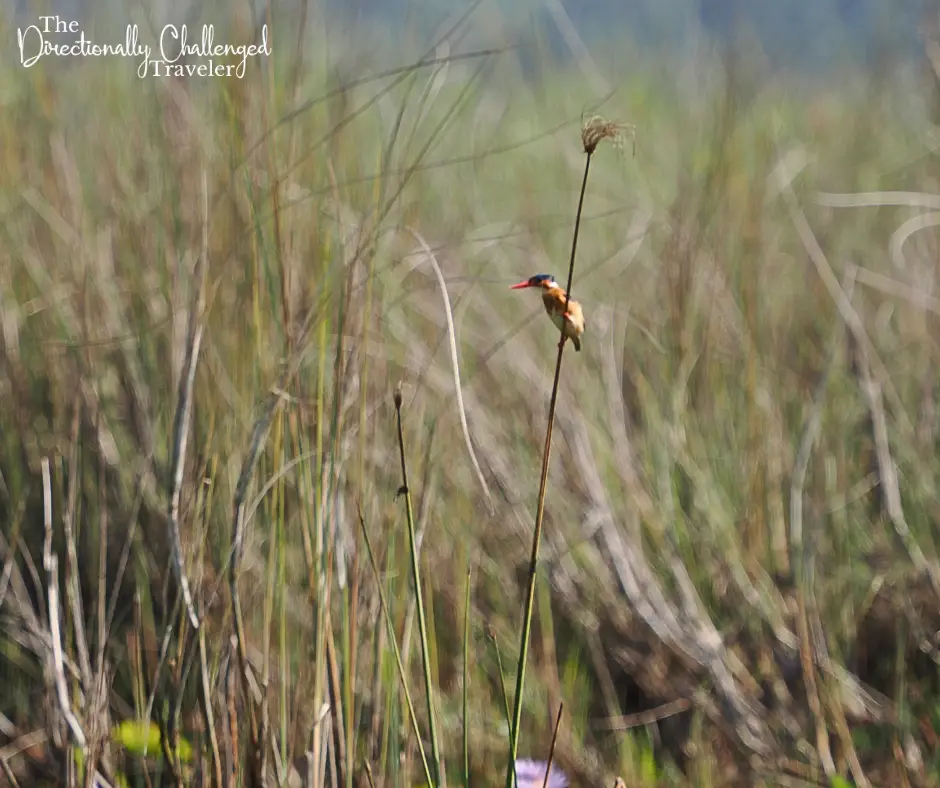
We set off into Mabamba Bay, a massive wetland on the edge of Lake Victoria. The transition was instant. One minute, we were speeding across the lake; the next, we were surrounded by a sea of papyrus reeds towering over our heads. It felt like entering a different world, silent except for the splash of the pole and the call of the Malachite Kingfishers darting across the water like blue bullets.
The Hunt
“Keep your eyes on the floating vegetation,” my local skipper whispered. He cut the engine and began to pole us silently through the thickets.
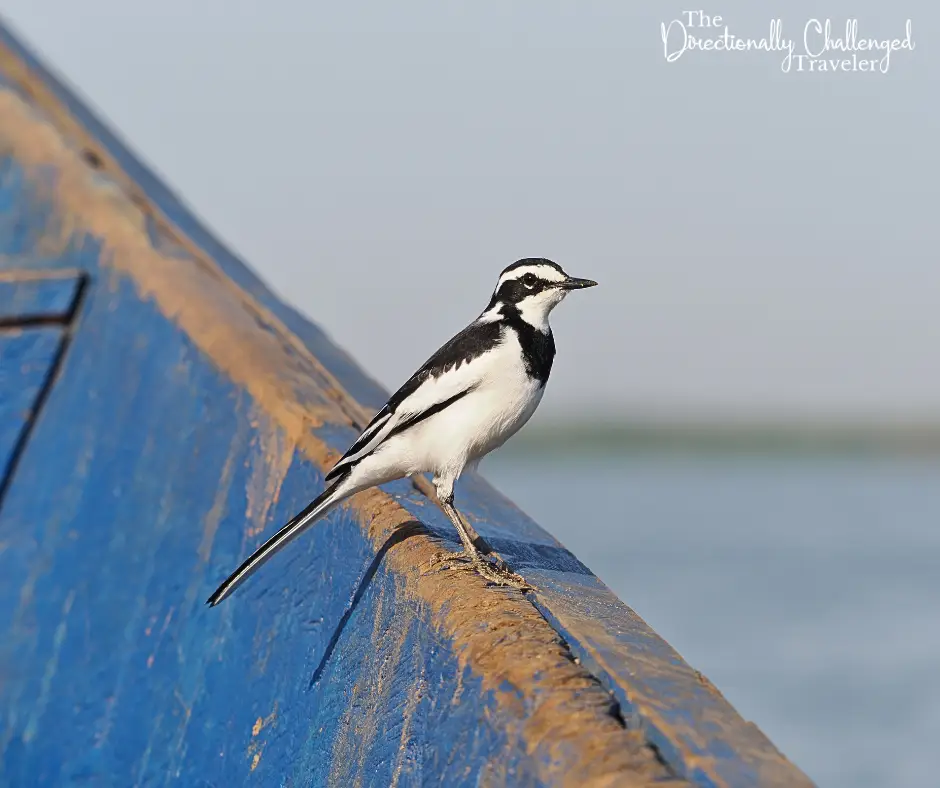
For the first hour, we saw plenty of incredible birdlife. We spotted African Jacanas (the “Jesus bird”) walking on lily pads, Purple Herons, a pied wagtail, and the (very exotic) Ugandan duck. For any birder, this is paradise. But the tension in the boat was palpable. We were all looking for The One.
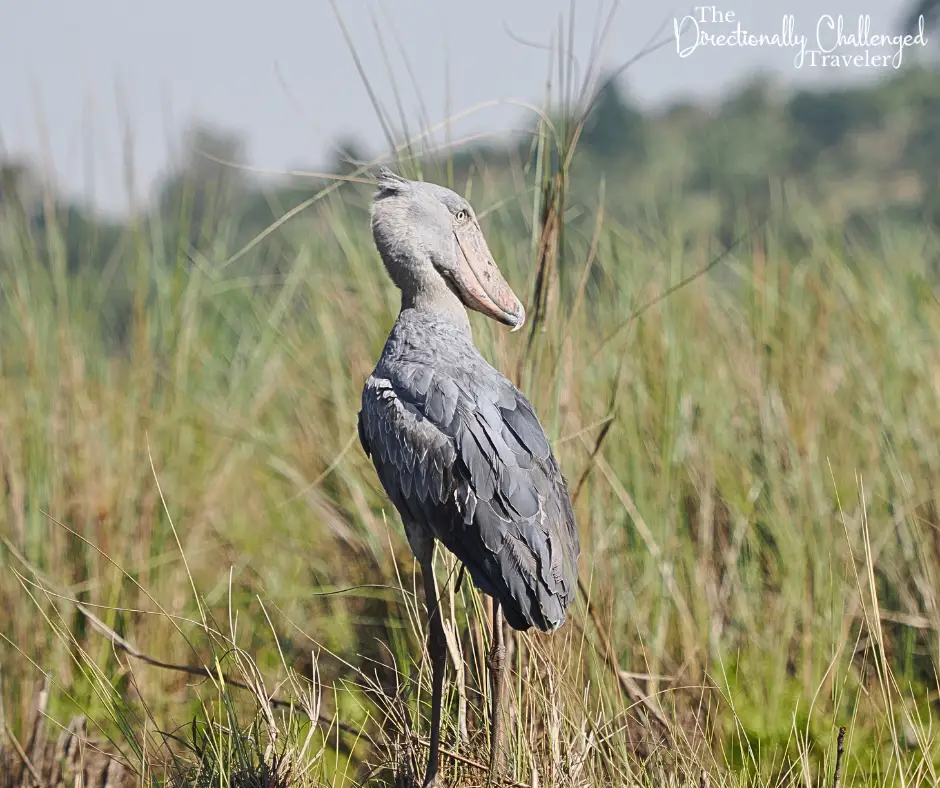
The Shoebill is solitary and shy. They can stand motionless for hours, blending perfectly with the grey-blue of the dying papyrus. Honestly, you don’t find them; your guide finds them.
The Encounter
Suddenly, Amos pointed a long finger toward an opening in the grass about fifty meters away. “There,” he breathed.
It was massive. Standing nearly five feet tall, with slate-grey feathers and that distinct, comical, yet terrifying bill, stood the Shoebill Stork. It stared right at us with piercing, pale eyes. It looked less like a bird and more like a velociraptor that had somehow survived the extinction event.
We drifted closer, the engine off. The bird didn’t flinch. Then I saw its partner standing a few feet to its side. Amos let me know that they are often spotted together during mating season, but they do not mate for life.
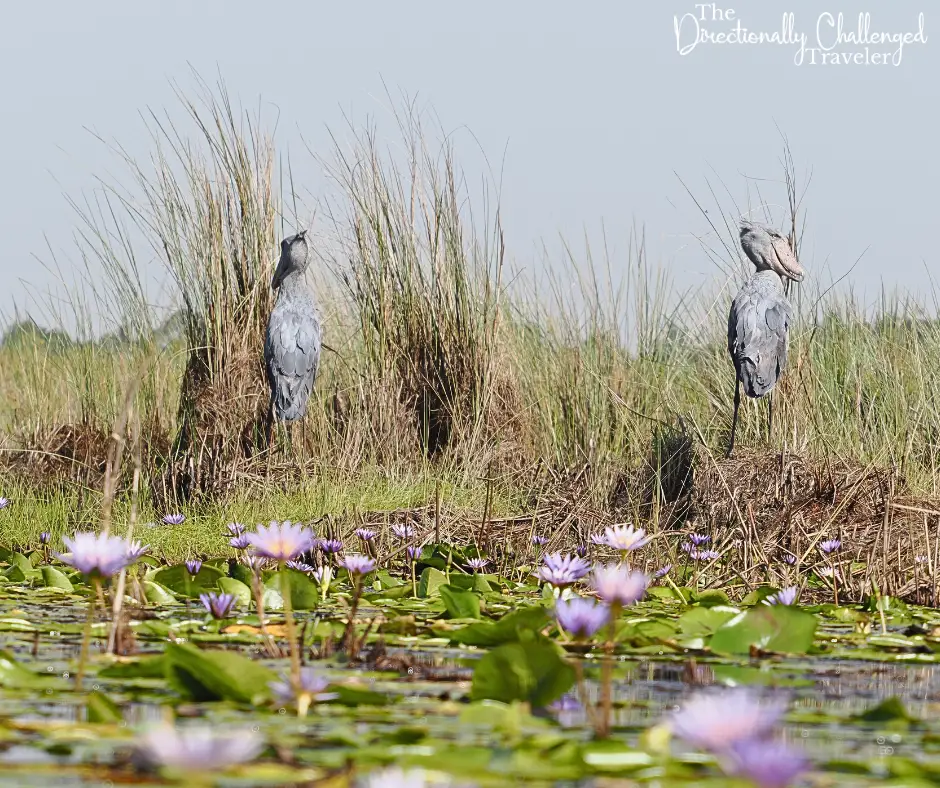
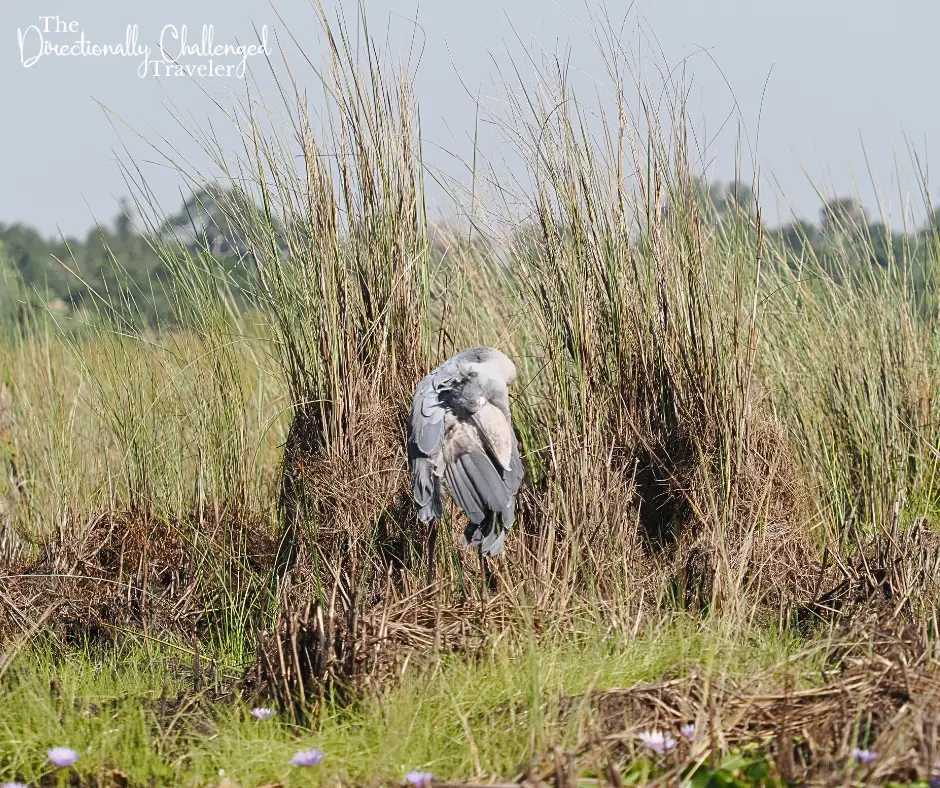
We watched in reverence for nearly twenty minutes. Every now and then, they would shift their weight or preen a feather, but mostly, they just stood there, radiating an ancient, prehistoric energy.
All of a sudden, they spread their wings and took flight. While I was excited to see their massive wingspan (around 8 FEET!), I was also sad that my time with the shoebill was coming to an end.
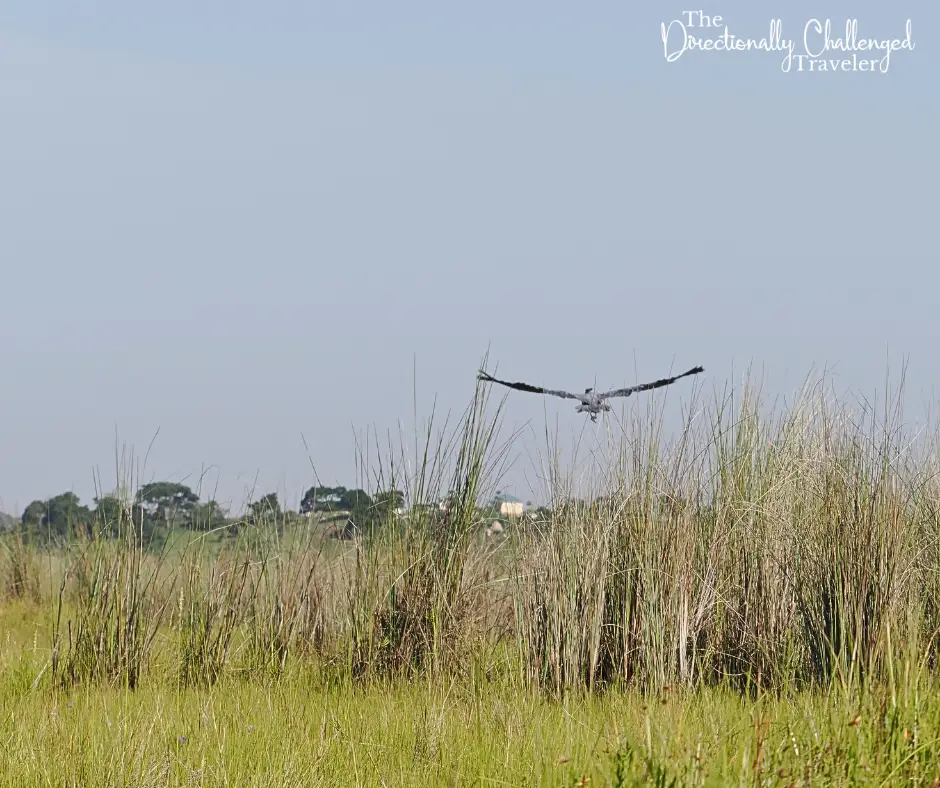
However, Madrid, my boat captain, said we were going to try to follow them – and we did.
Thanks to her skill and Amos’s sharp eyes, we found them a little while later and got to spend more time with them and hear their calls.
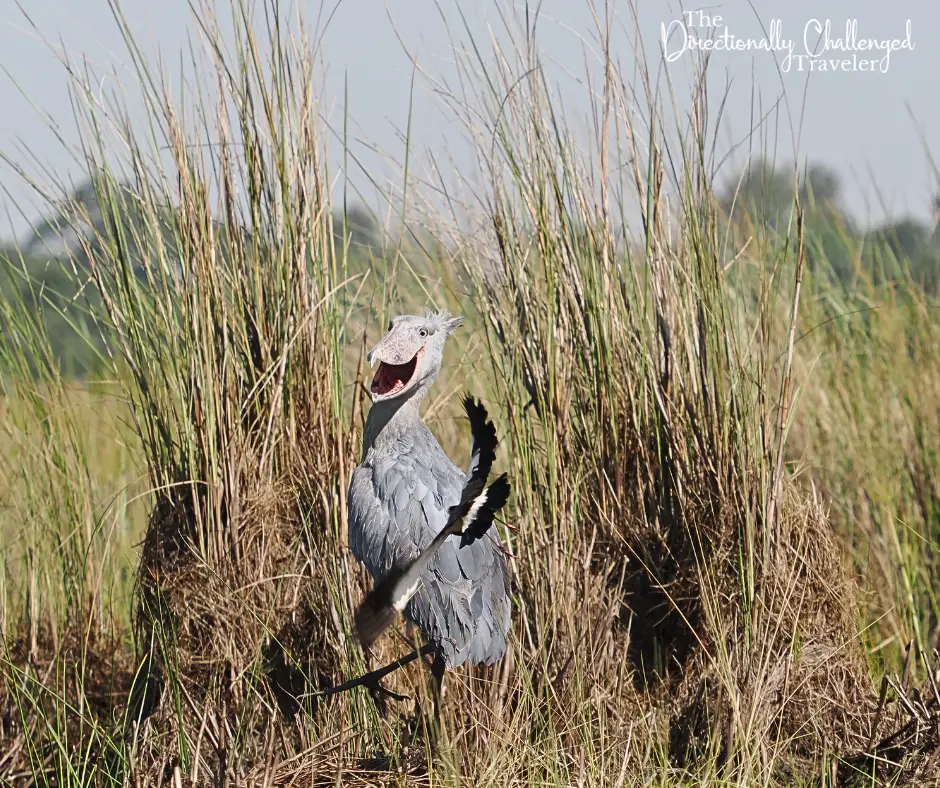
Seeing a Shoebill in photos is one thing; seeing one in the wild, surrounded by the silence of the swamp, is a spiritual experience for nature lovers.
The Ride Home
After leaving our prehistoric friends to their fishing, we motored back, buzzing with adrenaline.
By the time we got back to Entebbe in the early afternoon, I was exhausted but exhilarated. It’s a specialized tour, yes, but seeing one of Africa’s rarest birds in its natural habitat is a memory that sticks.
Practical Tips for This Tour
If you’re planning to book this Viator tour, here are a few things I learned:
- Bring Binoculars: While the guides have sharp eyes, you’ll want your own pair to see the details of the feathers and the eyes.
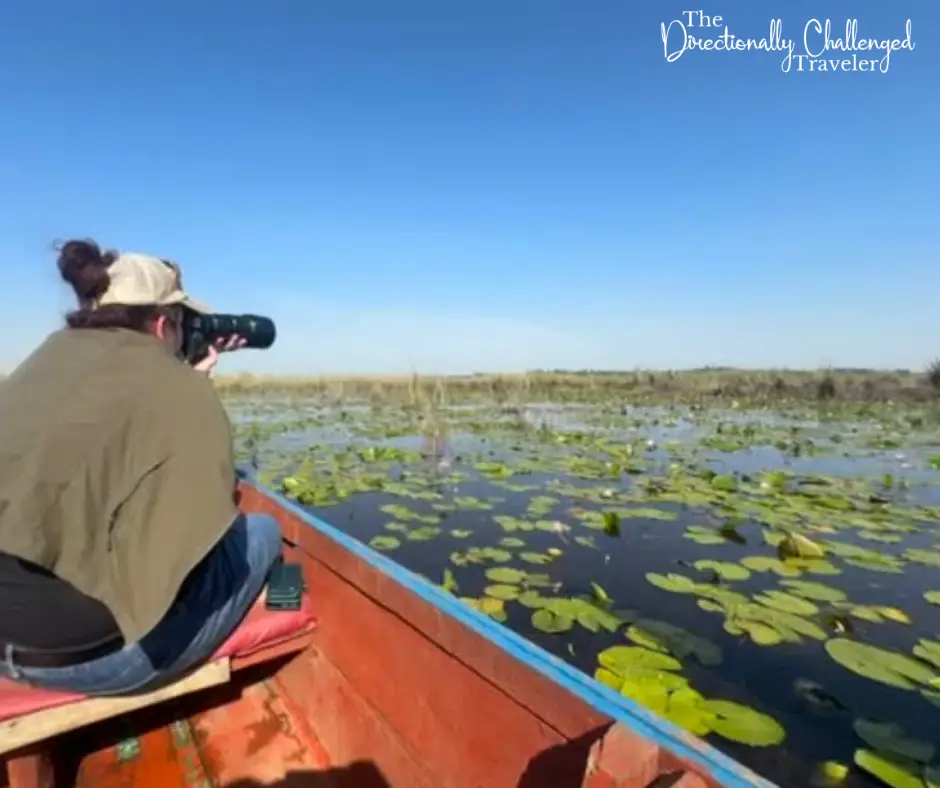
- Lens Power: If you are a photographer, bring your longest lens. I had my 400mm lens.
- Sun Protection: You are on the water with zero shade for several hours. A hat, sunglasses, and strong sunscreen are mandatory.
- Patience is Key: We got lucky and saw one in an hour. Sometimes it takes longer. Trust your guide; they know the swamp better than anyone.
The Verdict:
If you are in Uganda, do not skip Mabamba and try to see a Shoebill. It’s a short, accessible adventure that puts you face-to-face with a living dinosaur. Bonus: Amos sent photos of me enjoying the incredible experience, which was a pleasant surprise.
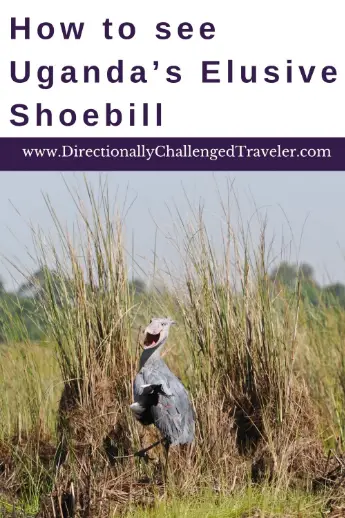
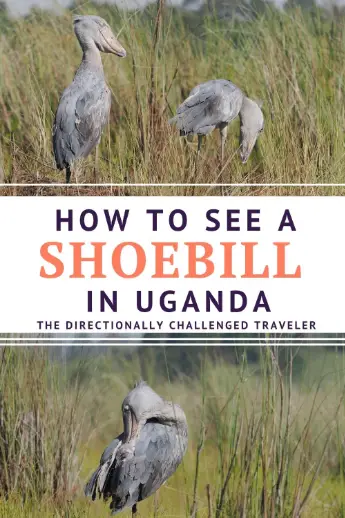
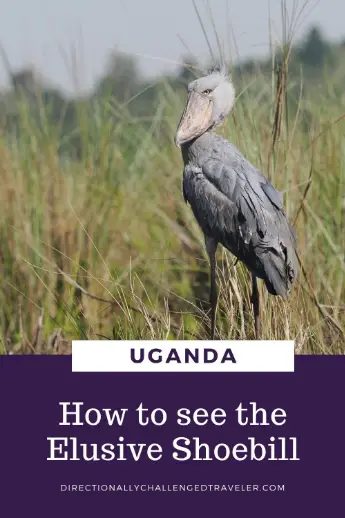
Save “How to See a Shoebill in Uganda” for Later
About the Author

Read More About Africa





Have You Seen These Yet?


Hey there! I’m Pamela. Just a woman who has fallen in love with getting lost around the world. I’ve traveled to 42 countries across 7 continents.
My mission? To inspire you to ‘let the bucket list flow’ and see what the world has to offer.
My promise: All of my photos are not edited. What you see is what you get.
Join a small-group safari to Kenya & Uganda!
- Go trekking and get close to gorillas and chimpanzees
- See the big 5 Safari Animals
- See The Great Migration
- Sunrise hot air balloon ride and champagne breakfast included
- Maximum of 12 guests
Capital Cities book

- Discover the world through this 258 page book covering 118 cities
- 3 photos by me!
- Perfect as a gift or for your coffee table
Travel Shop
- Accommodation Comparison Excel
- Printable Bucket Lists
- Travel Planning Resources
- & More!
Leave a Reply