
Have You Seen These Yet?

Hey there! I’m Pamela. Just a woman who has fallen in love with getting lost around the world. I’ve traveled to 42 countries across 7 continents.
My mission? To inspire you to ‘let the bucket list flow’ and see what the world has to offer.
My promise: All of my photos are not edited. What you see is what you get.
Join our small-group Tour to Tanzania 2026!
- Witness the breathtaking Great Migration
- Enjoy an exhilarating walking safari and hot air balloon ride
- Unwind on Zanzibar’s beautiful beaches
Capital Cities book
- Discover the world through this 258 page book covering 118 cities
- 3 photos by me!
- Perfect as a gift or for your coffee table
Join Newsletter
Get weekly travel tips, featured destinations, and more! Let’s get lost together.
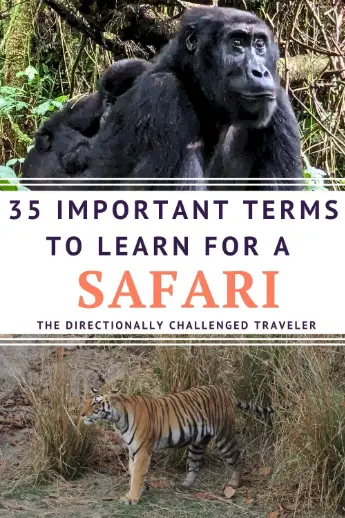
30+ Important Safari Terms to Learn Before You Go
Africa / January 9, 2026 / Be the first to comment
After four incredible journeys across two continents—including three distinct expeditions through the African bush and a soul-stirring tiger safari in the jungles of India—I’ve learned that the wild has a language all its own. There is a specific, electrifying energy that settles over a vehicle when the tracker goes silent and points to a fresh paw print in the dust, but for a first-timer, the terminology can be as dense as the scrubland itself. On my first trip, I found myself nodding along when our guide mentioned “kopjes” or “browsers,” instead of just asking. As a nature lover, I thought I knew more than I actually did!
Whether you are heading to the Serengeti to witness the Great Migration in Kenya or navigating the backwaters of a conservancy in search of the Little Five, understanding the vocabulary of the wild enriches every sighting. To help you hit the ground running (or driving), I’ve compiled a list of over 30 essential safari terms that I wish I had known before my first game drive. Use these to brush up before your flight so you can spend less time wondering what a “boma” is and more time soaking in the magic of the wilderness.
This post contains affiliate links. This means if you purchase something from a link, I may make a small commission, at no cost to you. This helps me keep the site running and free.
If you like this post, be sure to sign up for my e-mail list for travel inspiration & tips, or connect with me on Facebook, Instagram, Twitter, BlueSky, Threads, or Pinterest. I also have a Facebook group where you can ask me anything travel related – and I share travel deals!
35 Safari Terms to Learn Before You Go
Game Drive
An excursion by vehicle into the bush to view and photograph wildlife in their natural habitat. These typically occur in the early morning (starting before sunrise) or late afternoon when animals are most active.
The Big Five
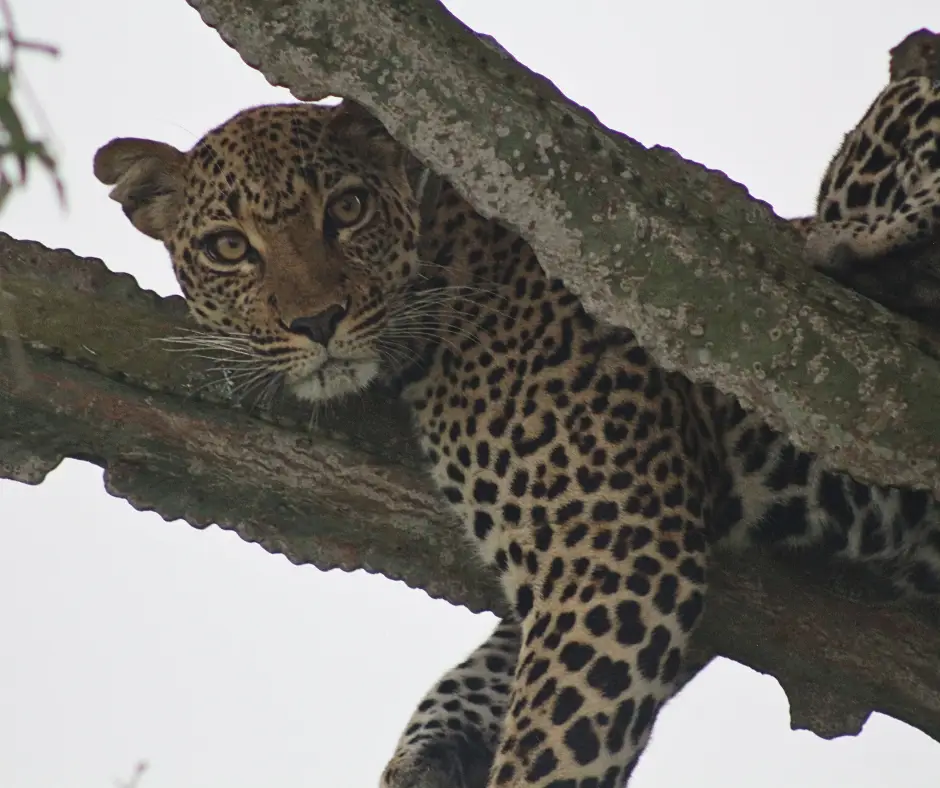
This famous group includes the lion, leopard, elephant, rhinoceros, and buffalo. Originally a hunting term for the most dangerous animals to track on foot, it is now the “must-see” list for wildlife viewers.
The Little Five
A playful play on the Big Five, referring to the elephant shrew, ant lion, rhinoceros beetle, buffalo weaver, and leopard tortoise. These smaller creatures are often highlighted during guided bush walks.
The Ugly Five
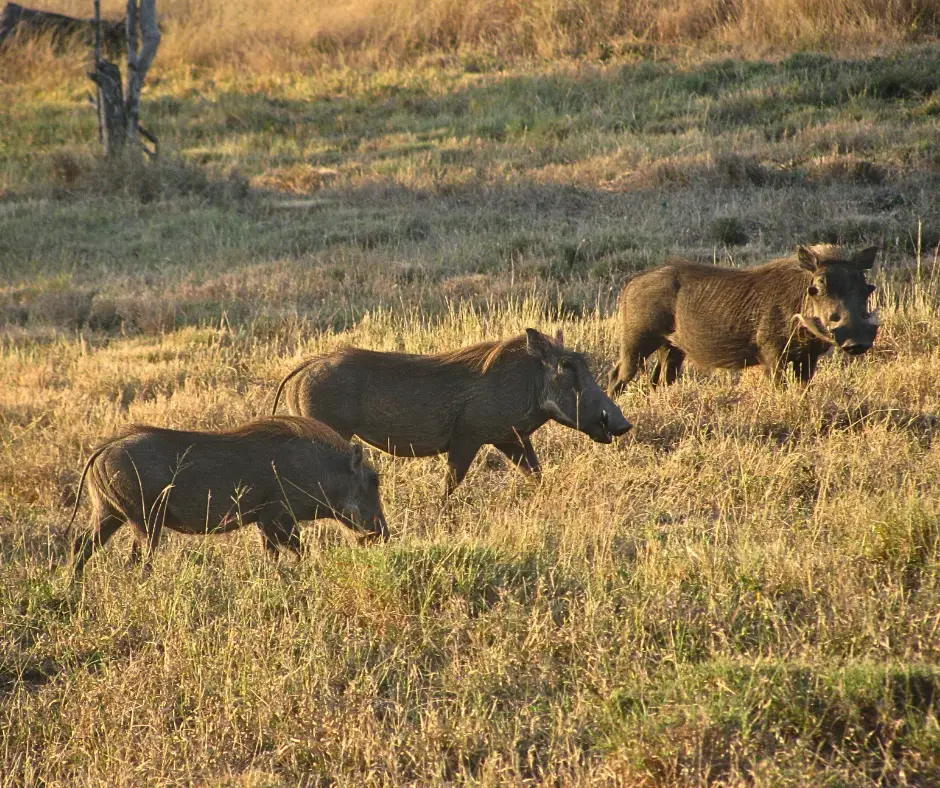
This is another group to add to your safari list – spotted hyena, warthogs, wildebeest, marabou stork, and vultures. You’ll probably impress your guide if you know this safari term! They’re superficially called unattractive, but I think hyenas are so cute!
Sundowner
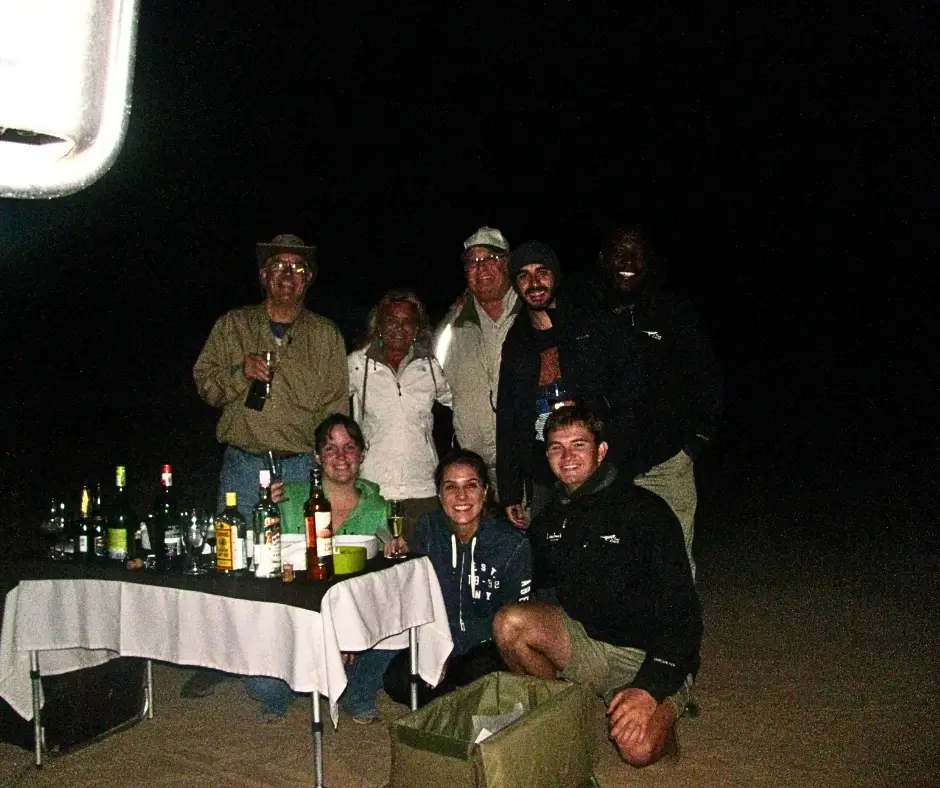
A classic safari tradition of stopping for a drink and snacks in the bush as the sun sets. It is a time to relax and reflect on the day’s sightings before heading back to camp. Dinner is usually served after the afternoon game drive. This is our jeep group from Lion Sands enjoying a sundowner!
Bush/Bushveld
A general term used to describe the wild, uncultivated wilderness areas where wildlife thrives. It can range from dense forests to open grasslands and scrubland.
Kopje/Koppie
A small, rocky hill or outcrop that rises abruptly from the flat plains, particularly common in the Serengeti. These formations are often used as vantage points by predators like lions and cheetahs.
Hide
A camouflaged structure, often near a waterhole, where photographers and observers can sit quietly to watch wildlife without being detected. It provides a unique, ground-level perspective of animal behavior.
Conservancy
A protected area of land managed by local communities or private owners for wildlife conservation. These areas often have stricter limits on vehicle numbers and allow for activities like night drives.
Airstrip
A cleared, unpaved runway located within or near a national park for small bush planes. For many remote camps, this is the primary way guests arrive and depart.
Ranger/Guide
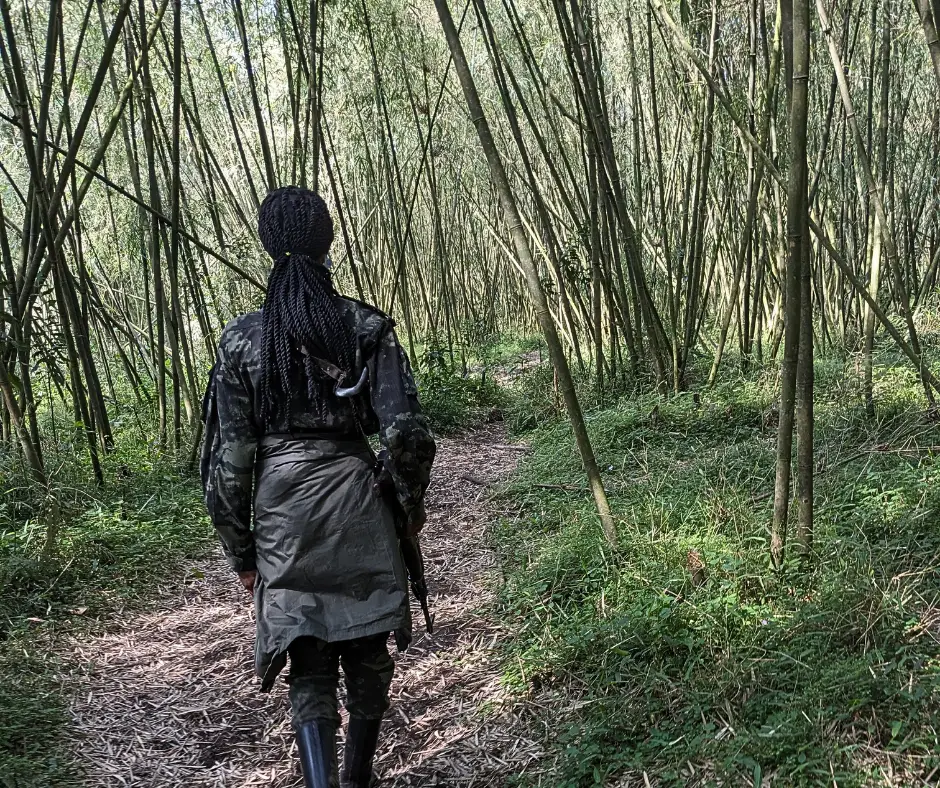
The professional who drives the vehicle and locates wildlife while sharing knowledge about the ecosystem. They are highly trained in animal behavior, tracking, and safety. They often have a weapon for protection – especially on walking safaris.
Tracker
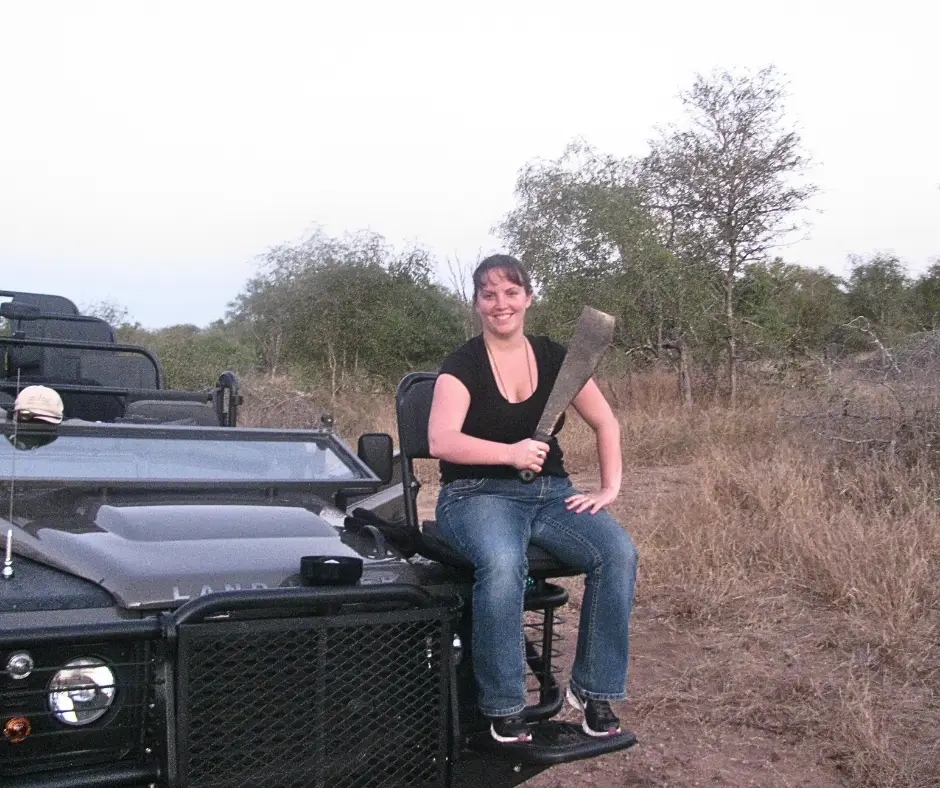
A specialist, often sitting on a seat at the front of the vehicle, who looks for animal prints and signs in the dirt. Their expertise is crucial for finding elusive animals like leopards. For gorilla trekking, these trackers head out very early to find the gorilla families for trekkers.
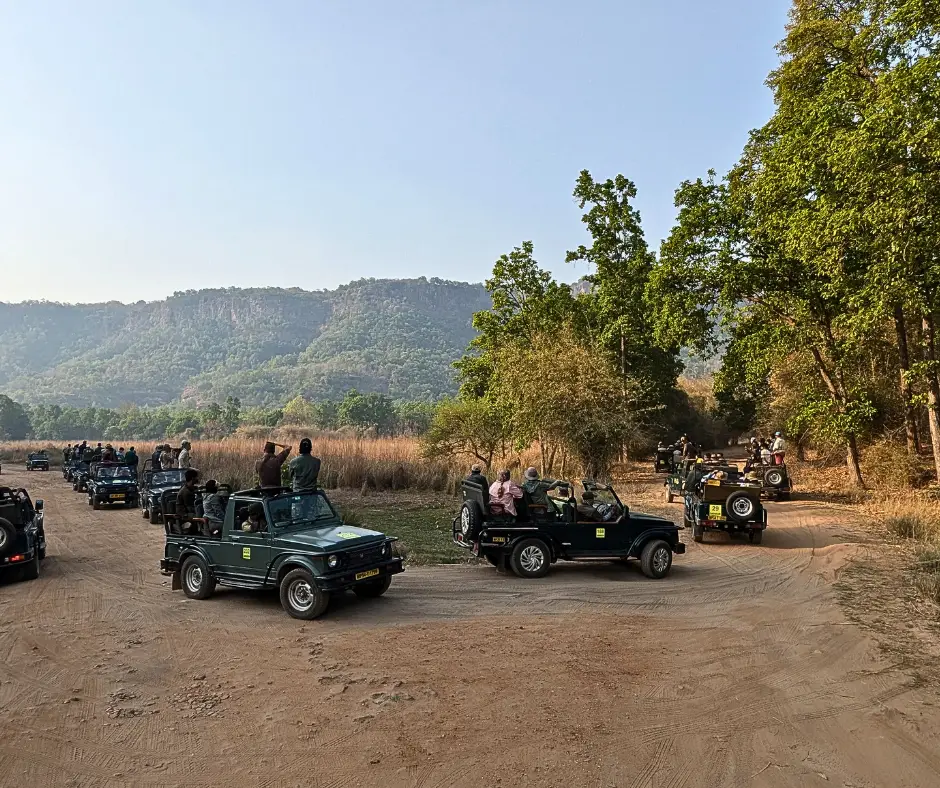
Anticlockwise Circle
A technique used by guides when several vehicles are at a sighting to ensure everyone gets a fair view. It involves a coordinated movement of vehicles to prevent crowding. This is actually really cool to watch when it’s done correctly. Just be sure to keep all hands and arms in the car for any close calls.
Rondavel
A traditional, circular African hut with a cone-shaped thatched roof.
Boma
An enclosure traditionally used to protect livestock, but in a safari context, it usually refers to an outdoor dining area surrounded by a fence. It is the setting for communal dinners around a fire.
Browse
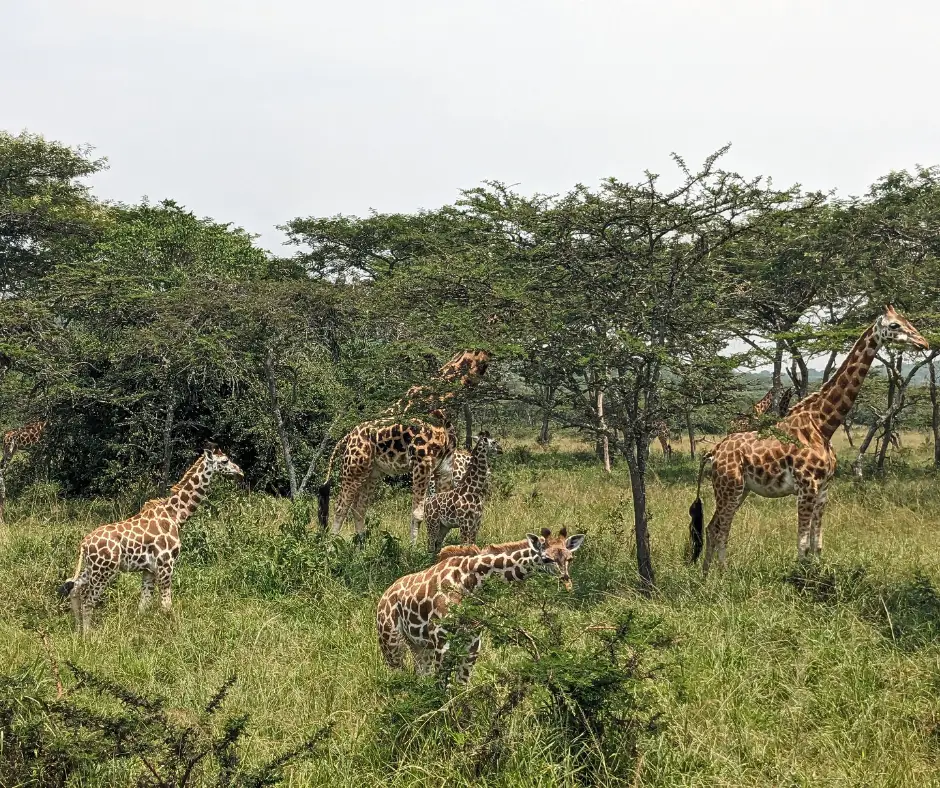
Vegetation like leaves, twigs, and bark is consumed by animals such as giraffes and black rhinos. These animals are called “browsers.”
Graze
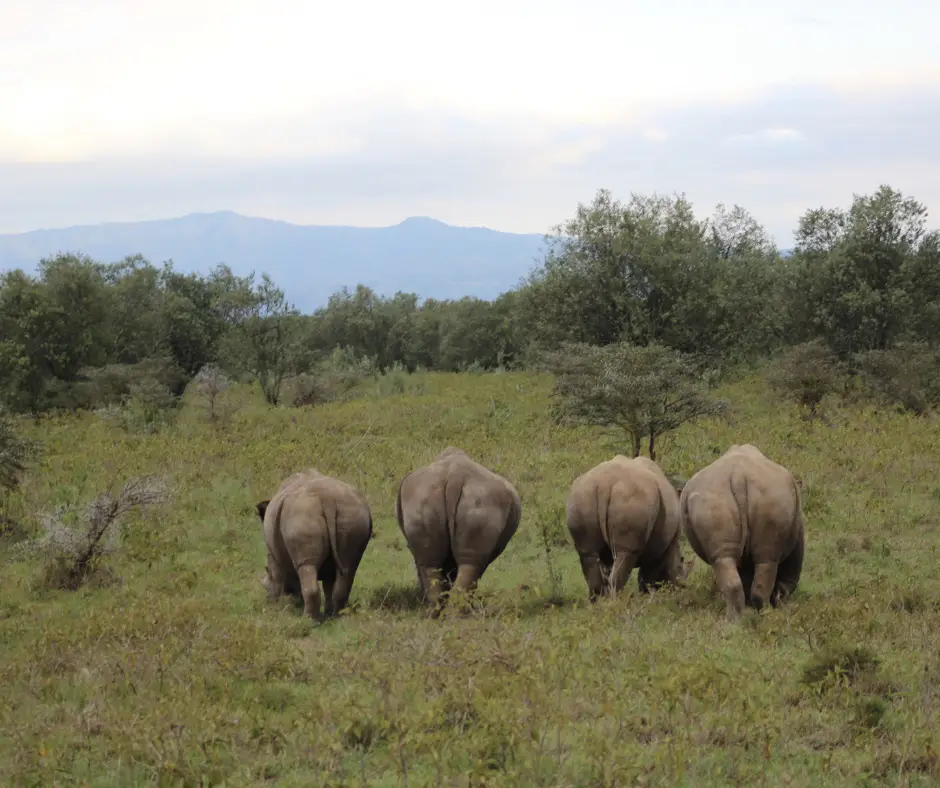
The act of eating grass and other low-lying vegetation. “Grazers,” such as zebras and wildebeest, are typically found in open plains.
Primate
A group of mammals that includes lemurs, monkeys, and great apes like gorillas and chimpanzees. Many travelers take specific “trekking” safaris to see these species. Join me in 2027 to go gorilla & chimpanzee trekking!

Night Drive
A safari excursion conducted after dark using powerful red-filtered spotlights to find nocturnal animals. It offers a chance to see creatures like aardvarks, civets, leopards, and hunting lions.
Bush Walk
A guided trek on foot through the wilderness, accompanied by an armed ranger. The focus is on smaller details of the ecosystem, such as plants, tracks, and insects, rather than large predators.

Calving Season
The time of year when many herbivores give birth, usually timed with the arrival of the rains and fresh grass. This period often sees an increase in predator activity as well.
The Great Migration
The annual movement of over a million wildebeest and zebras through the Serengeti-Mara ecosystem (in Kenya and Tanzania). It is considered one of the most spectacular wildlife events on the planet.

Ungulate
A general term for hoofed mammals, which include everything from tiny dik-diks to massive hippopotamuses. Most of the animals seen on a plains safari fall into this category.
Herbivore
An animal that feeds exclusively on plants. They make up the vast majority of the biomass in the African savanna.

Omnivore
An animal that eats both plant and animal matter. Baboons and warthogs are common examples seen on safari.
Carnivore
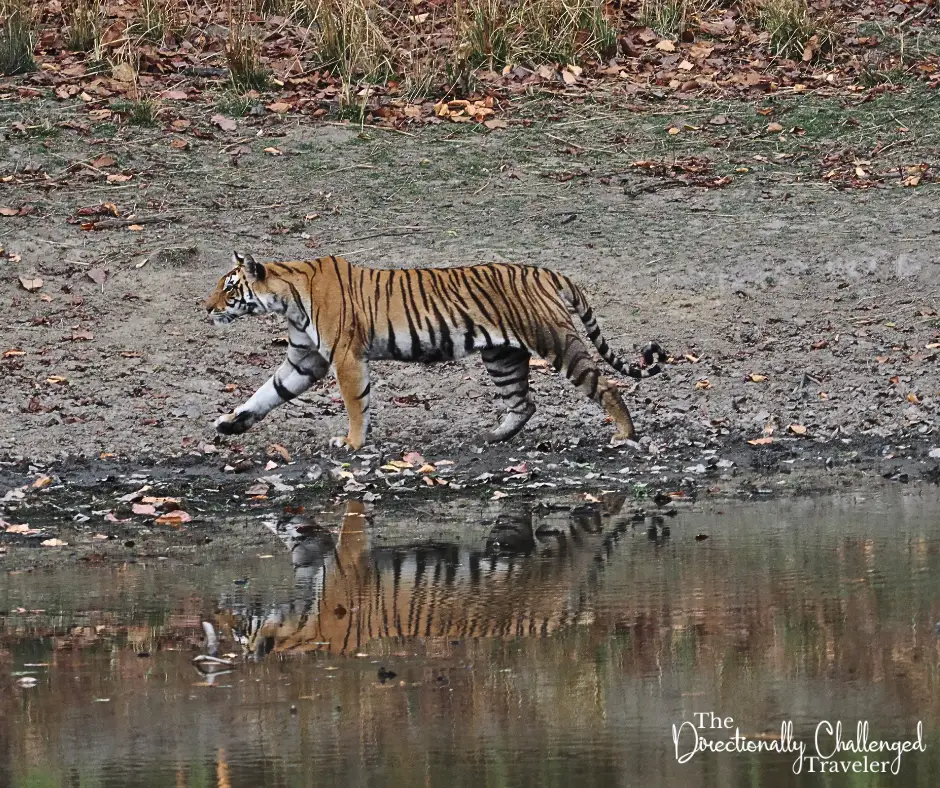
An animal that eats the flesh of others. In a safari context, this usually refers to “The Big Cats” and other predators, such as hyenas and wild dogs.
Territory
An area defended by an animal or group of animals against others of the same species. Animals use scent marking and vocalizations to define these borders.
Acacia
A genus of trees and shrubs characterized by thorns and feathery leaves, iconic to the African landscape. They are a primary food source for giraffes and elephants.
Water Hole
A natural or man-made depression where water collects, attracting high concentrations of wildlife. These are prime locations for viewing animals, especially during the dry season.
Lodge
A permanent structure providing luxury or mid-range accommodation within or near a park. They typically feature solid walls, private bathrooms, and central dining areas
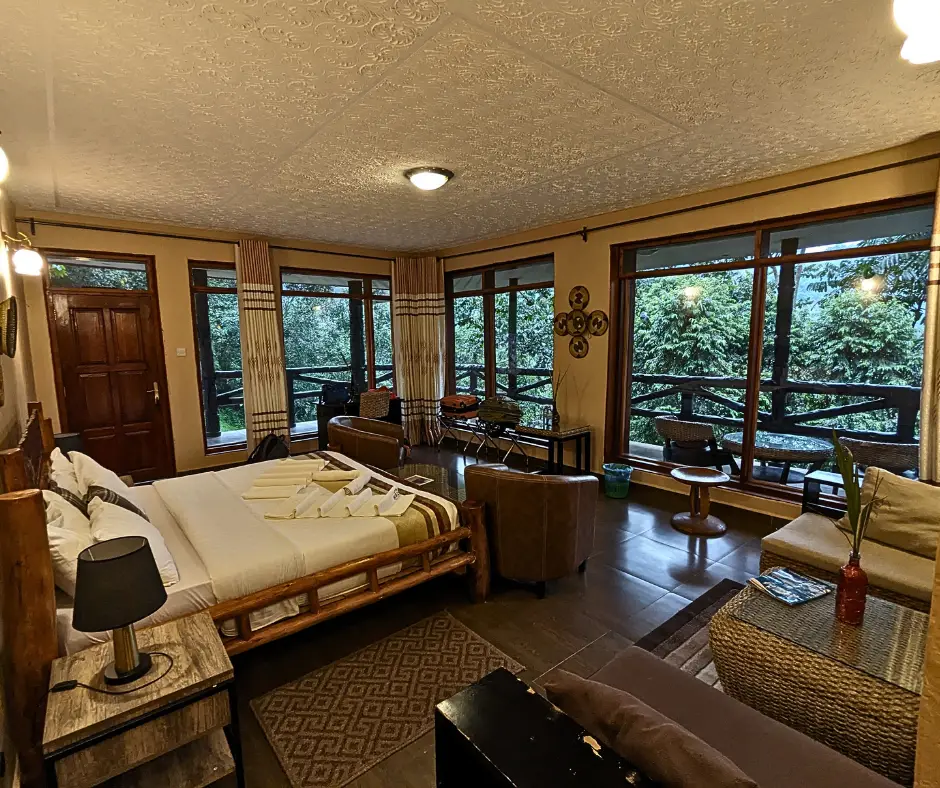
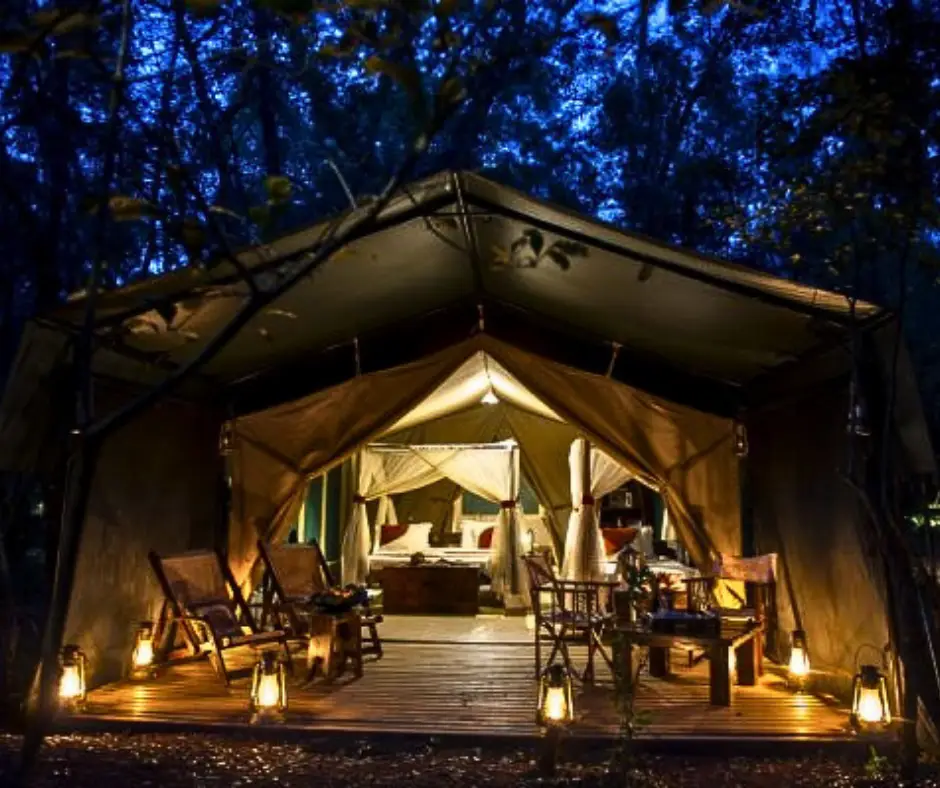
Tented Camp
A safari accommodation consisting of large, walk-in canvas tents with “real” furniture and ensuite facilities. It offers a more authentic “under canvas” feel without sacrificing comfort.
Full Board
A booking arrangement that includes your room and all meals. On safari, this often includes snacks and bottled water during game drives as well.
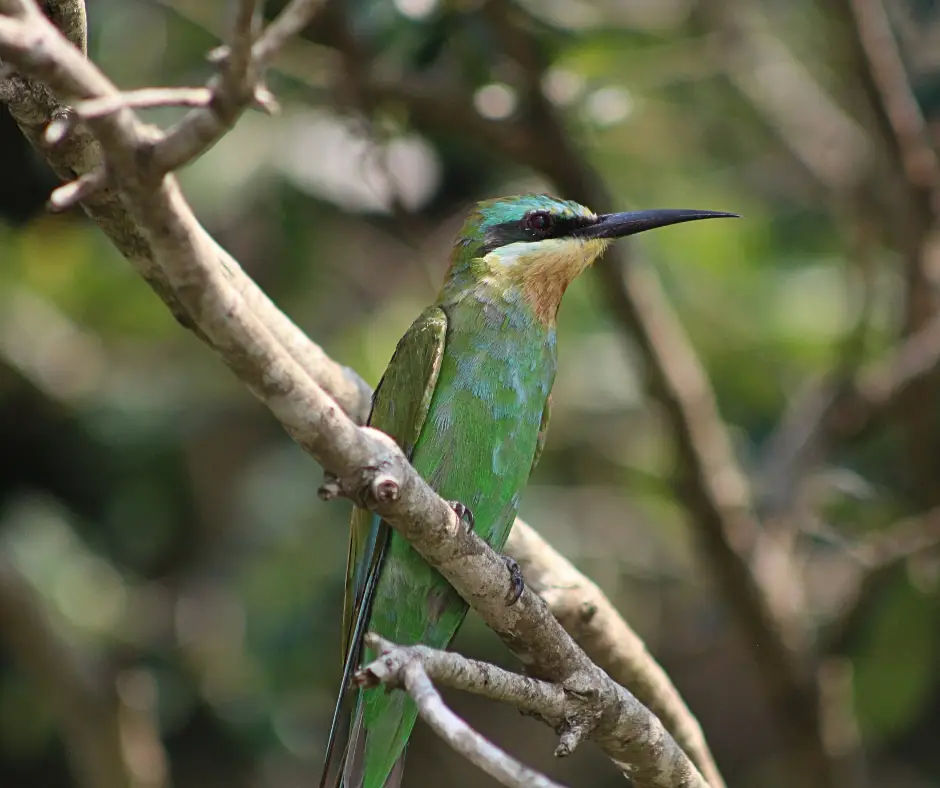
Binos
An abbreviation of “binoculars”. This is important for wildlife viewers, but especially for birdwatchers. The first time I heard this, I thought our guide was pointing out a rhino and I couldn’t find it. He was telling us to get out our binos!
Khaki Fever
This one made me chuckle. Don’t worry – you don’t need a vaccine or treatment. It’s the phenomenon of feeling attracted to a ranger/guide dressed in khaki on safari.
Savanna
A grassy plain with few trees and bushes. Typically found in tropical and subtropical regions, with a wet and a dry season.

Midden
This one is a bit more gross – it’s an animal dung heap. Yes, a place for communal pooping. White rhinos are known to do this.
Conclusion
No matter how many times I return to the bush, that rush of adrenaline during a sunrise game drive never fades. Whether you find yourself sipping a sundowner in the shadow of an acacia tree or quietly watching a herd of elephants, having these terms in your back pocket will help you connect more deeply with the landscape and the experts who protect it. Safari life is about more than just checking boxes on a list; it’s about understanding the delicate balance of the ecosystem and the stories written in the tracks on the ground. Pack your binoculars, brush up on your “Big Five,” and get ready for a life-changing adventure—the wild is waiting for you.
Save “Safari Terms to Learn” for Later

About the Author
Read More About Africa




Leave a Reply